
Why Your Cat Is Still Scratching: The Truth About Flea Dirt and "Invisible Eggs"
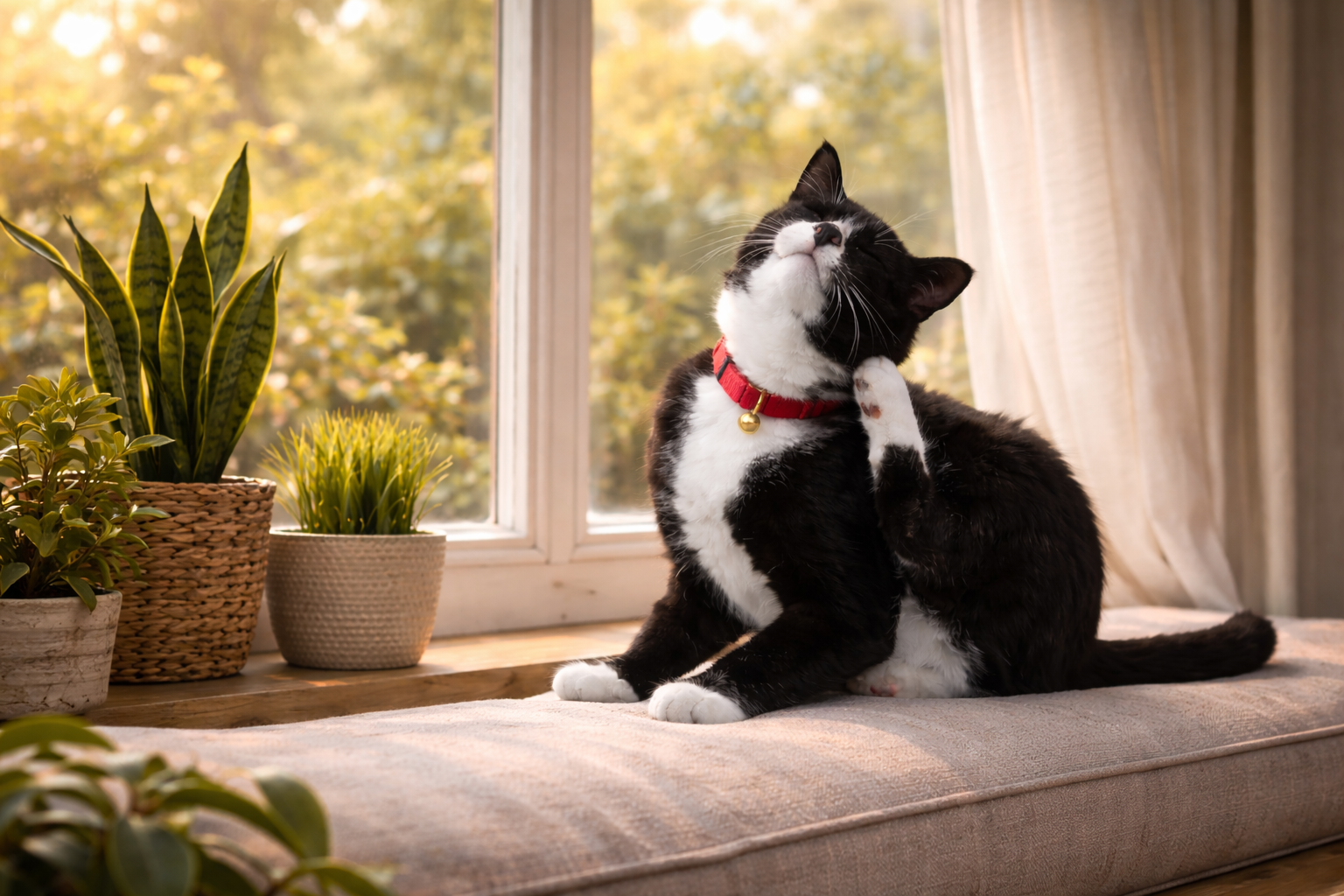
If you’ve applied flea drops but your cat is still frantically biting at their fur, you aren't alone. It’s a common frustration: you kill the fleas you see, but the scratching never stops.
The reason? Most "quick-fix" treatments only target the 5% of adult fleas currently on your cat. To truly clear an infestation, you have to understand the "Invisible 95%."
The 5% Rule: What’s Hiding in Your Carpets
A flea infestation in your home is like an iceberg. The fleas you see jumping are just the tip.
-
5% Adult Fleas: The ones your cat is trying to groom away.
-
95% The "Invisible" Majority: This includes eggs, larvae, and pupae hidden in your carpets, floorboards, and your cat's favorite sunspots.
Research indicates that 56% of pet owners feel deep "infestation fatigue." Why? Because flea eggs are non-adhesive; they roll off your cat like tiny bowling balls, landing in the deepest crevices of your home. Worse yet, in the pupae stage, fleas can remain dormant for months, waiting for the heat of a host to "wake up" and hatch. This is why a "cleared" house can suddenly have a breakout months later.
Flea Dirt: The Warning Sign You Can't Ignore
Have you noticed tiny black specks of "pepper" on your cat’s skin? That is flea dirt, which is actually digested blood excreted by adult fleas. If you see this, it is a definitive sign of an active infestation. These microscopic threats are notoriously resilient to standard vacuuming, which is why a biological approach is essential.
How to Break the Cycle with Cat Natural Defense + Purrbiotics
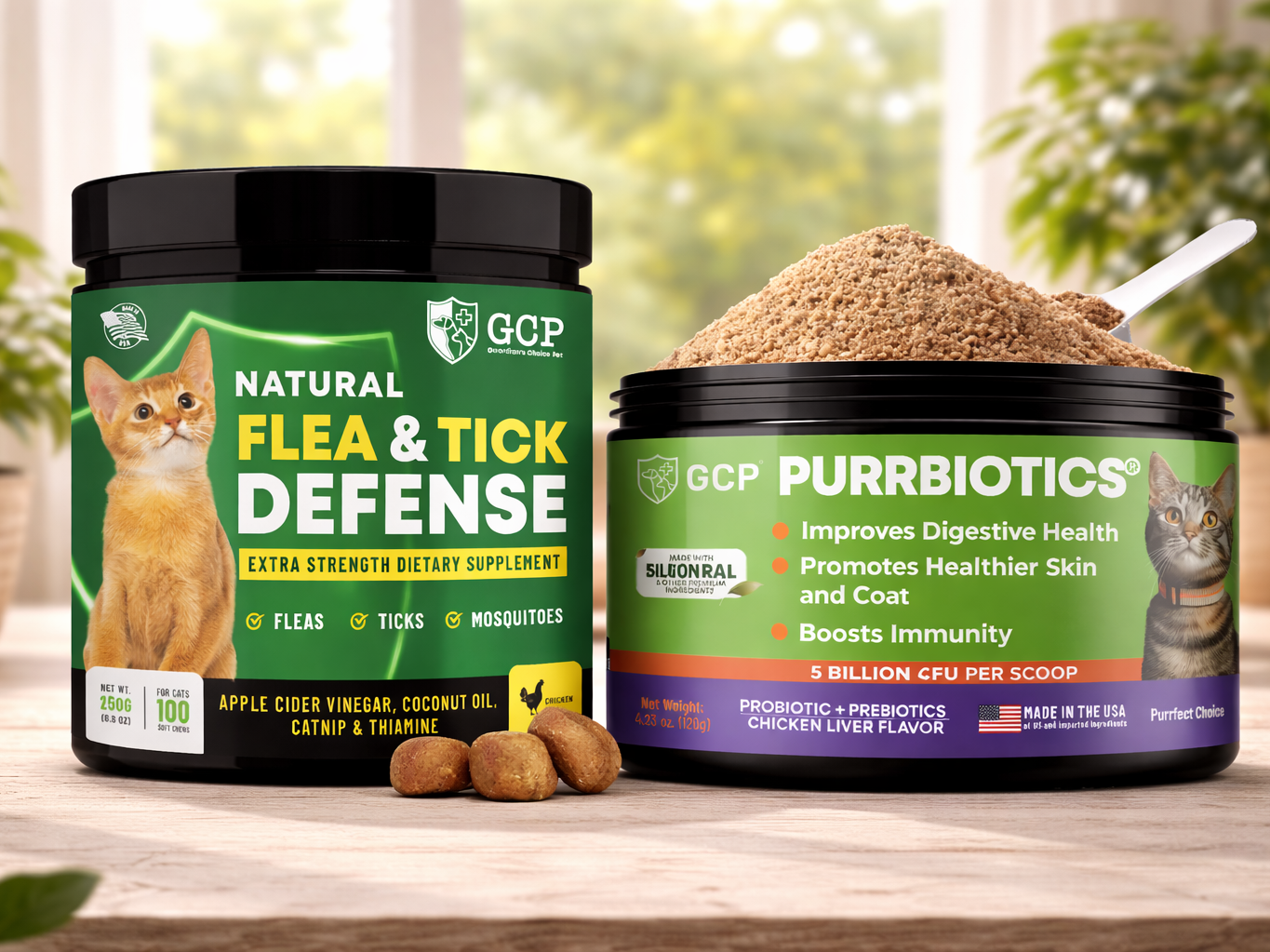
To stop the scratching, you must move beyond surface-level toxins. Guardian’s Choice Pet provides a dual-action "Biological Cleanup":
-
Internal Discouragement: Our Cat Flea & Tick Natural Defense Chews uses botanical compounds to create an internal environment that is less attractive to biting pests. It acts as a secondary "shield" from the inside out.
-
Soothe the "Itch-Scratch-Infect" Loop: Flea saliva triggers a "histamine hangover." Even after the fleas are gone, the inflammation remains. Our Cat Purrbiotics work to balance the Gut-Skin Axis, strengthening the skin barrier to prevent secondary infections from excessive grooming.
Frequently Asked Questions About Persistent Flea Issues
-
Place the black specks on a wet white paper towel. If they dissolve and leave a reddish-brown stain (blood), it is flea dirt. If they stay black, it’s just debris. Flea dirt means an active colony is nearby.
For all general inquiries, please contact us at info@guardianschoice.com
© Copyright. All rights reserved.