
Enrichment for Cats: Ways to Improve Their Lives
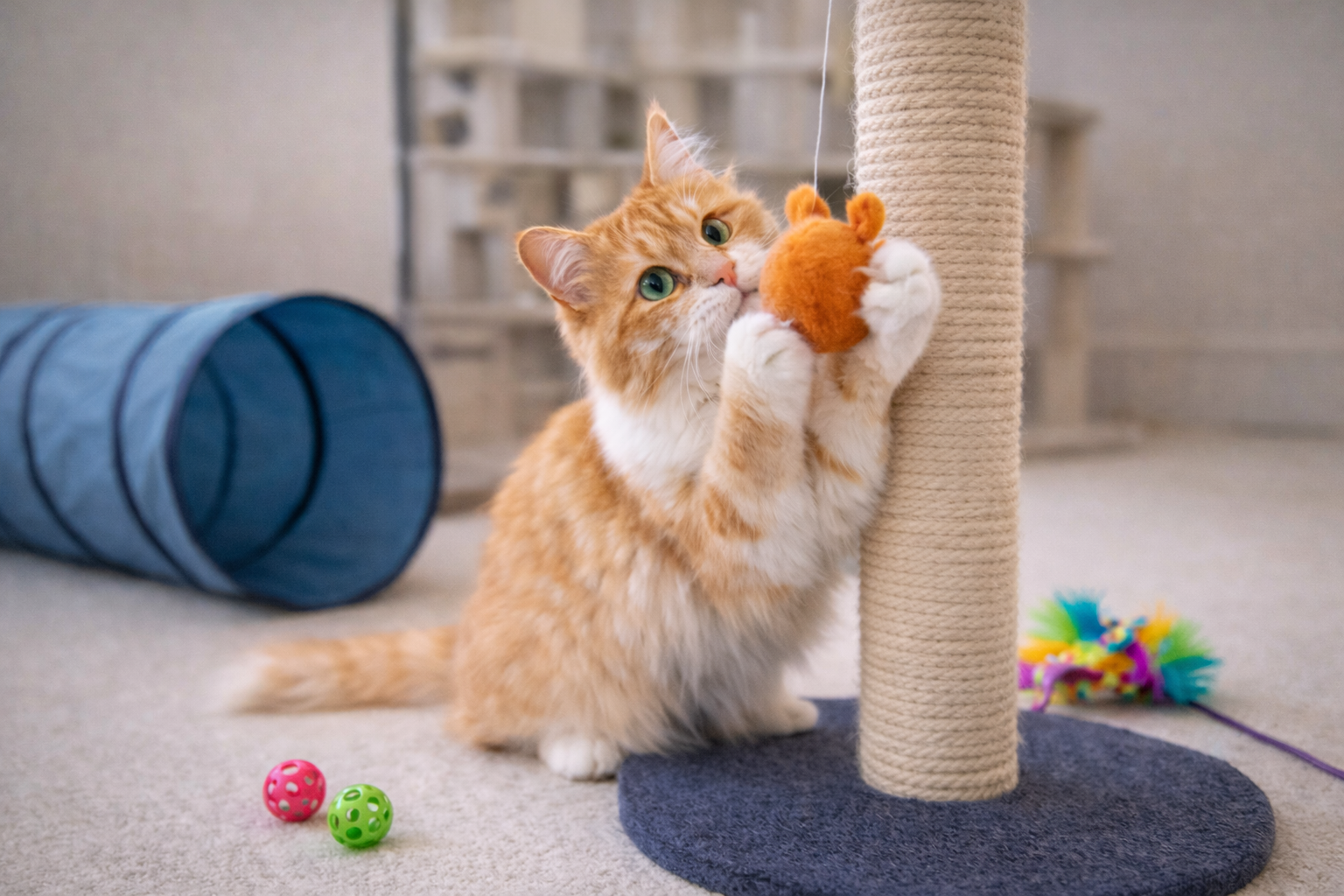
Indoor cats often experience limited stimulation compared to their outdoor counterparts, which can influence behavior, activity levels, and daily engagement. Enrichment focuses on creating variety through movement, problem-solving, and sensory input that reflects natural feline instincts. By combining environmental changes with consistent routines, pet parents can create a more engaging and balanced daily experience for their cats.
Why Enrichment Matters for Indoor Cats
It is easy to assume that a comfortable home, a full food bowl, and a cozy nap spot are enough for a cat. On the surface, it seems like everything they need is already provided. But cats are not passive animals. They are natural hunters, problem-solvers, and observers of their environment.
When those instincts are not used regularly, they do not disappear. Instead, they often show up in subtle ways. A cat may become less active, more reactive, or develop repetitive behaviors that seem confusing at first glance.
Enrichment is about closing that gap between what a cat is designed to do and what their environment allows them to do. It is not about adding complexity. It is about adding opportunities.
The Hidden Effects of Under-Stimulation
When a cat does not have enough outlets for physical and mental activity, the effects are not always obvious right away. They tend to build gradually.
Some common signs include:
-
Increased sleeping beyond normal patterns
-
Reduced interest in play
-
Over-grooming or repetitive behaviors
-
Scratching furniture more frequently
-
Sudden bursts of hyperactivity at night
These behaviors are often labeled as “personality,” but they can also reflect a lack of engagement.
Research referenced by the American Veterinary Medical Association (AVMA) highlights that environmental enrichment plays a role in supporting normal behavioral patterns in cats, particularly in indoor settings where natural stimuli are limited.
Citation: American Veterinary Medical Association (AVMA). Environmental Needs of Cats. https://www.avma.org/resources-tools/pet-owners/petcare/environmental-needs-cats
This does not mean enrichment prevents all behavioral changes. However, it reinforces the idea that environment influences how cats behave and interact.
The 4 Pillars of a Happy Indoor Cat
A well-rounded enrichment approach focuses on multiple areas rather than a single activity. Cats benefit from variety, and each pillar supports a different instinct.
1. Vertical Territory
Cats naturally seek height. Elevated spaces provide a sense of security and control over their environment. Cat trees, shelves, or window perches allow them to observe without feeling exposed.
2. Foraging Over Feeding
In the wild, cats hunt multiple small meals throughout the day. Puzzle feeders or slow feeders recreate that experience, encouraging problem-solving and pacing.
3. Sensory Play
Cats rely heavily on scent and texture. Introducing safe elements like catnip, silvervine, or textured toys can stimulate curiosity and exploration.
4. The Visual Window
A window with movement outside becomes a dynamic source of stimulation. Birds, light changes, and outdoor activity create a constantly changing environment.
Each pillar contributes to a more engaging daily routine, helping cats express natural behaviors in a safe space.
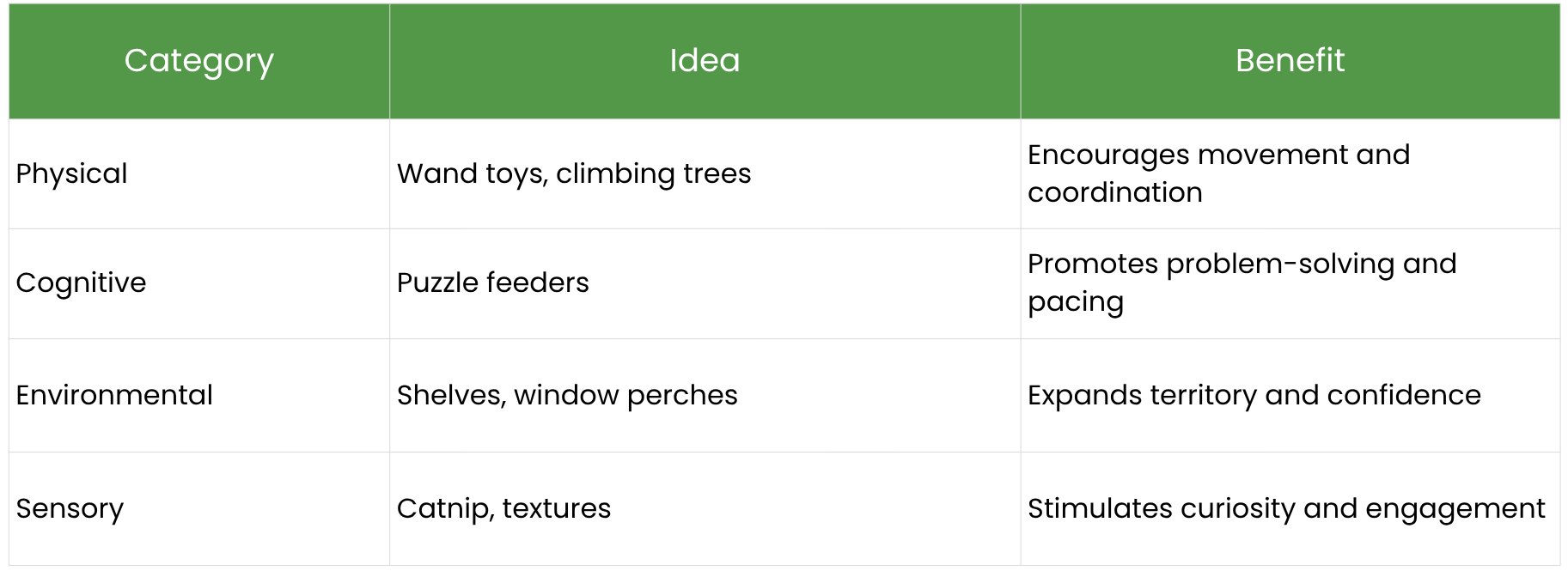
This combination creates variety without overwhelming your cat or complicating your routine.
Building a Sustainable Daily Routine
-
Timing play around these periods makes the interaction feel more instinctive and engaging rather than forced.
-
Feeding at consistent times Regular feeding helps anchor your cat’s internal clock. Over time, this creates a rhythm where activity, rest, and feeding naturally fall into place, reducing unpredictability throughout the day.
-
Rotating toys every few days Instead of introducing new toys constantly, cycling through a small selection keeps familiar items feeling “new” again. This prevents overstimulation from too many choices while maintaining curiosity.
-
Providing quiet downtime after stimulation After play or exploration, cats naturally transition into rest. Creating a calm environment during this period helps reinforce a complete cycle of activity followed by recovery, which mirrors natural behavioral patterns.
Beyond these basics, consistency also builds environmental confidence. When your cat knows where to go, what to expect, and when things will happen, they are less likely to rely on attention-seeking or reactive behaviors to create stimulation on their own.
It also helps regulate anticipatory behavior. Cats begin to recognize patterns such as “play happens before dinner” or “quiet time follows activity.” This predictability reduces sudden spikes in energy or restlessness because your cat is no longer guessing what comes next.
Cats respond strongly to predictability. When activities happen regularly, they begin to anticipate them. This anticipation becomes part of the enrichment itself, turning everyday routines into something your cat actively looks forward to rather than passively experiences.
Where GCP Fits Into Your Cat’s Routine
Daily routines are not just about activity. They also include feeding and care habits that happen consistently.
GCP products are designed to fit naturally into these moments:
-
GCP Purrbiotics Can be mixed into meals, making it part of feeding time without adding extra steps
-
GCP Cat L-Lysine Easily incorporated into daily routines, especially for pet parents who prefer simple, repeatable habits
-
GCP Flea & Tick Natural Defense for Cats Fits into overall care routines, complementing grooming and hygiene practices
These products are not positioned as enrichment tools. Instead, they support consistency, which plays a role in how structured and predictable your cat’s day becomes.
ays a role in how pets process their environment and respond to it.
Frequently Asked Questions
-
Most cats benefit from short, consistent sessions rather than long, occasional ones. Even 10–15 minutes of interactive play twice a day can make a noticeable difference in engagement. The key is consistency, not intensity.
A More Engaged Life Starts with Small Changes
Enrichment does not require a complete overhaul of your home. It starts with small, intentional adjustments that align with your cat’s natural instincts.
By combining environmental variety, consistent routines, and simple daily habits supported by products like GCP Purrbiotics Cat L-Lysine, and Flea & Tick Natural Defense for Cats, you create a structure that supports engagement without adding complexity.
Because at its core, enrichment is not about doing more. It is about doing the right things, consistently.
For all general inquiries, please contact us at info@guardianschoice.com
© Copyright. All rights reserved.