
How Dogs Read Human Emotions
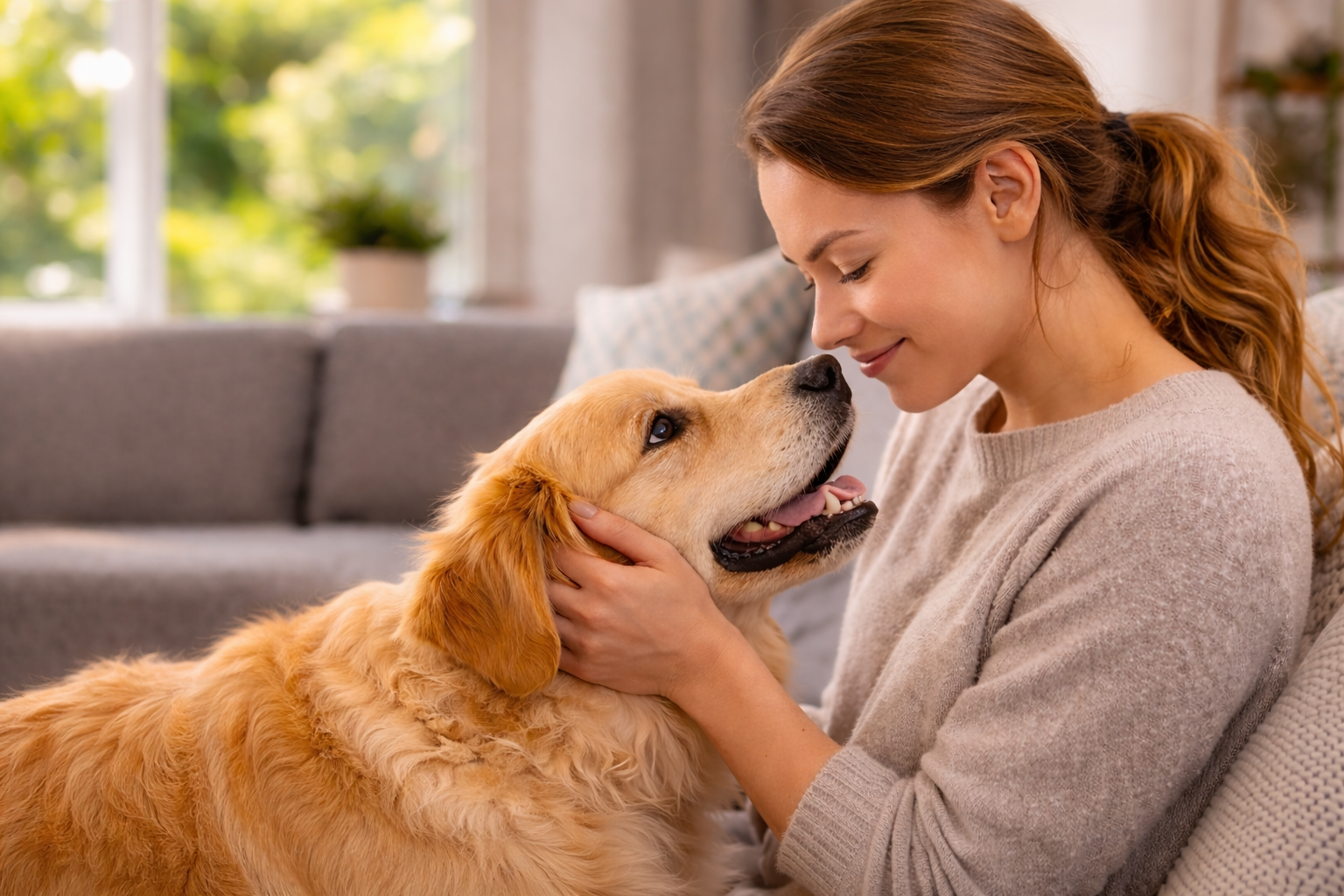
Dogs are highly attuned to human emotions, using a combination of scent, visual cues, and sound to interpret how we feel. Research suggests they can respond to changes in tone, facial expression, and even chemical signals like stress-related hormones. Because of this sensitivity, maintaining a consistent daily routine and balanced environment can help support how dogs respond to emotional changes around them.
The Science Behind Your Dog’s “Sixth Sense”
Most dog owners have experienced it. You come home after a stressful day, and your dog behaves differently. They may stay closer than usual, watch you more carefully, or respond more quietly than they typically would.
This behavior is not random. It reflects a combination of biological ability and learned behavior. Dogs have evolved alongside humans for thousands of years, which has shaped their ability to interpret human signals in ways few other species can.
Research available through PubMed Central suggests that dogs can recognize and respond to human emotional cues by interpreting visual signals, behavior patterns, and environmental context. The findings suggest that dogs can integrate both visual and auditory information to distinguish between positive and negative human emotions. This supports the idea that dogs are not simply reacting to one signal, but rather combining multiple inputs to form a response.
Rather than having a “sixth sense,” dogs rely on a highly refined set of natural abilities.
How Dogs Read Human Emotions
Dogs do not interpret emotions the way humans do, but they are highly effective at reading patterns. These patterns come from three primary channels: scent, sight, and sound.
The Smell of Stress
A dog’s sense of smell is one of its most powerful tools. Research has shown that dogs can detect chemical changes in human breath and sweat, including compounds associated with stress.
When a person experiences stress, cortisol levels may rise. Dogs can pick up on these changes, even when they are subtle. This can influence how they behave, often leading to increased attentiveness or changes in interaction.
Facial Recognition and Expression
Dogs are highly observant of human faces. Studies suggest that they can distinguish between different expressions and may focus on the eyes to interpret intent.
This is why a dog may respond differently to a relaxed expression versus a tense one. Over time, they learn to associate these visual cues with outcomes, shaping how they react in similar situations.
Tone and Sound Sensitivity
Dogs are also sensitive to vocal tone. They may not understand words in the same way humans do, but they can distinguish between tones that signal approval, excitement, or tension.
Higher, softer tones are often associated with positive interactions, while sharper or louder tones may signal stress or urgency. Dogs respond accordingly, adjusting their behavior based on what they perceive.
The Link Between Your Mood and Your Dog’s Behavior
Because dogs continuously observe their environment, they often reflect the emotional tone around them. This is sometimes referred to as emotional mirroring.
Research referenced by the American Veterinary Medical Association (AVMA) highlights how dogs can respond to human emotional states through learned association and environmental cues. Over time, this can influence their behavior patterns.
For example:
-
A calm environment may encourage relaxed behavior
-
A tense environment may lead to increased alertness
-
Changes in routine may influence how a dog reacts
This does not mean dogs fully experience human emotions in the same way. However, it does suggest that their behavior is closely linked to what they observe.
Supporting Your Dog’s Daily Emotional Balance
Since dogs are sensitive to environmental cues, consistency becomes important. A stable routine helps create predictability, which can influence how dogs respond to changes.
Key Routine Elements
-
Consistent Feeding Times Helps establish structure throughout the day
-
Regular Activity Supports both physical and mental engagement
-
Predictable Interaction Reinforces familiar patterns
-
Calm Environment Reduces sudden changes that may affect behavior
These elements do not eliminate emotional responses, but they can help create a more stable baseline.
Where GCP Fits Into Your Dog’s Routine
Daily routines often include multiple components, from feeding to activity and care. GCP products are designed to integrate into these routines without adding complexity.
-
GCP VitaPup Multivitamin Chews Supports daily nutritional intake as part of regular feeding habits
-
GCP OmegaPaws Premium Krill Omega-3 Commonly included in routines focused on skin, coat, and overall maintenance
These products are not designed to replace training or environmental consistency. Instead, they support routine-building, which plays a role in maintaining a predictable daily structure.
Understanding the Bigger Picture
Dogs do not need to understand human emotions in the same way humans do. What matters is their ability to detect patterns and respond accordingly.
By focusing on:
-
Consistency
-
Clear communication
-
Stable routines
Pet parents can create an environment where dogs feel more secure and responsive.
Over time, this stability can influence how dogs react to emotional changes, making interactions smoother and more predictable.
Frequently Asked Questions
-
Dogs do not experience emotions in exactly the same way humans do, but they are highly skilled at recognizing emotional cues. They observe patterns in behavior, tone, and body language, which allows them to respond in ways that appear empathetic. Over time, this creates the impression that they “understand” emotions.
Daily Support for a Balanced Routine
Consistency becomes easier when daily care is simple to maintain. GCP products are designed to fit naturally into everyday routines without adding extra steps.
-
Easy-to-administer chew format
-
Can be integrated into feeding time
-
No preparation required
-
Suitable for daily use
-
Supports routine consistency
GCP VitaPup Multivitamin Chews and GCP OmegaPaws Premium Krill Omega-3 are structured to complement daily habits, making it easier to maintain a routine that supports your dog’s overall balance.
A Final Thought
Your dog may not speak your language, but they are constantly reading your signals. Their ability to respond to your emotions is not a mystery. It is a result of biology, observation, and shared history.
By maintaining consistent routines and supporting daily habits with GCP products, you create an environment where your dog can respond more comfortably to the world around them.
Because sometimes, understanding your dog starts with understanding what they are already noticing.
For all general inquiries, please contact us at info@guardianschoice.com
© Copyright. All rights reserved.