
Why Camping Season Brings Hidden Risks for Pets
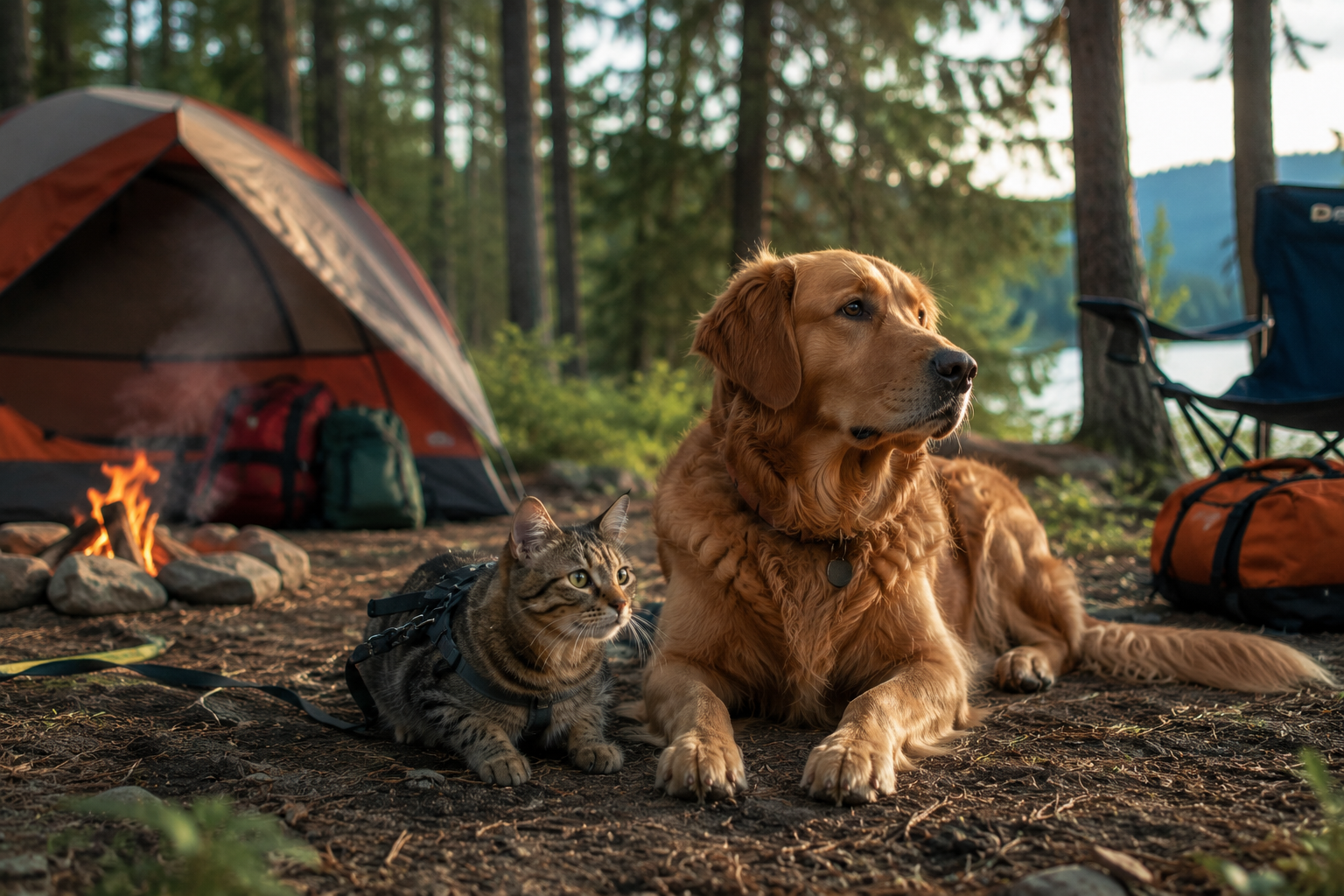
Camping season increases your pet’s exposure to fleas and ticks, especially in wooded and grassy environments. Starting a consistent routine before your trip helps support a more balanced approach to daily protection. Natural ingredients and simple habits can fit seamlessly into outdoor lifestyles. Preparing ahead of time makes the experience smoother for both pets and pet owners.
Why Camping Season Brings Hidden Risks for Pets
Camping trips are often associated with fresh air, open trails, and a welcome break from daily routines. For pets, especially dogs and even adventurous cats, it’s a chance to explore new environments filled with unfamiliar scents and textures. However, these same environments also introduce new variables that aren’t always immediately visible.
Tall grass, shaded trails, and wooded areas create ideal conditions for pests like fleas and ticks. Unlike urban or indoor environments, these natural settings are less controlled, which increases the likelihood of exposure. Pets moving through brush or resting on the ground can come into contact with these pests without any obvious signs at first.
Many pet owners only begin to think about protection once they notice scratching or irritation, but by then, exposure has already occurred. This is why timing plays such a critical role. Preparing before the trip—rather than reacting during or after—helps create a more manageable experience.
Research published in Animals highlights how environmental exposure influences how pets respond to external stressors. While the study focuses broadly on behavioral and physiological responses, it reinforces the idea that changes in environment, like transitioning from home to campsite, can impact how pets experience these exposures.
Understanding Wood Ticks and Outdoor Exposure
Among the different types of ticks, “wood ticks,” commonly known as American Dog Ticks, are especially associated with outdoor environments like campsites, hiking trails, and forested areas. These ticks tend to wait in tall grass or low vegetation, attaching themselves to passing animals.
What makes them particularly relevant during camping season is their activity level. Warmer months create favorable conditions, which means pets spending extended time outdoors are more likely to encounter them.
Unlike fleas, which may stay within a home environment once introduced, ticks are often picked up during outdoor activity. This makes prevention strategies slightly different. Instead of focusing only on the home, attention shifts to how pets interact with their surroundings.
Understanding where exposure happens helps shape a more practical approach. It’s less about avoiding the outdoors and more about preparing for it in a way that fits naturally into your pet’s routine.
Why Natural Prevention Fits Outdoor Lifestyles
For many pet owners, camping represents a return to simplicity—fewer chemicals, fewer artificial products, and a closer connection to nature. This mindset often extends to how they care for their pets during these trips.
Natural flea and tick approaches are designed to align with this lifestyle. Instead of relying on strong, reactive treatments, they focus on supporting a consistent internal and external environment. Ingredients like apple cider vinegar, coconut oil, and thiamine are often included in formulations designed to complement daily routines.
These ingredients are typically discussed in terms of how they interact with the body over time, rather than providing immediate results. This makes them well-suited for routine-based use, especially when preparing for activities like camping.
For pets that are frequently outdoors, this approach can feel more integrated. It becomes part of daily care rather than an additional step that interrupts the experience.
The 30-Day Routine: Building Consistency Before Your Trip
One of the key ideas behind natural flea and tick support is the concept of building consistency over time. Rather than expecting immediate changes, the focus is on gradually integrating support into your pet’s routine.
This is often described as a “30-day build-up” period. During this time, ingredients are introduced and maintained consistently, becoming part of your pet’s daily system.
Here’s how that timeline typically looks:
To better understand how different approaches work, it helps to compare them side by side:
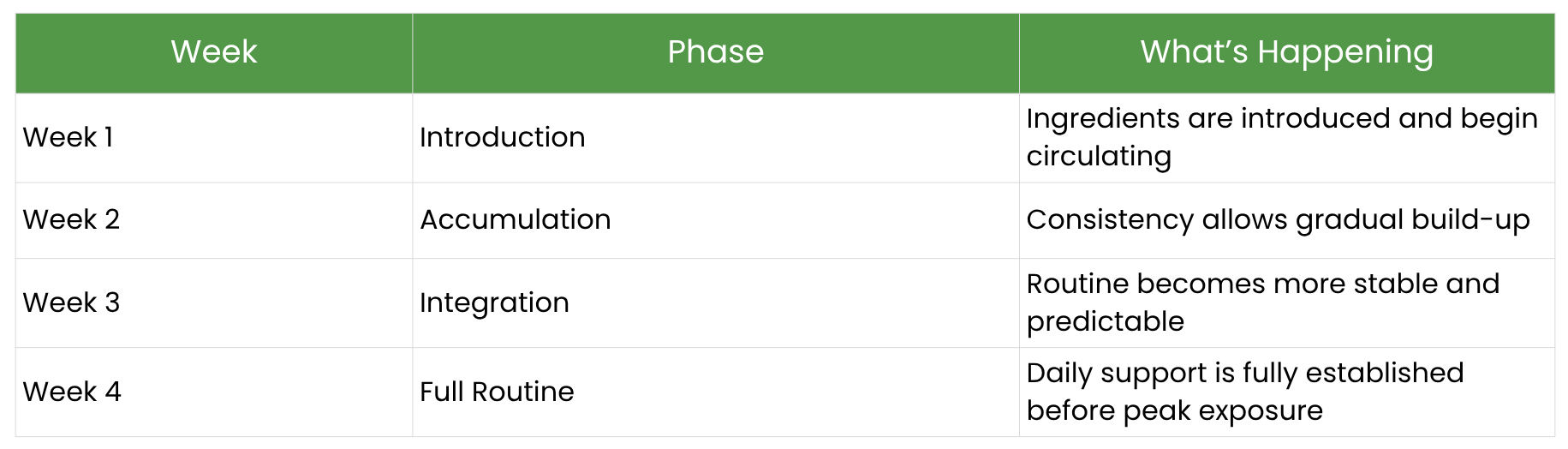
This framework helps pet owners plan ahead. Instead of starting protection the day before a trip, the process begins weeks in advance, allowing the routine to feel natural and established.
Natural vs Chemical Flea and Tick Protection
When preparing for outdoor trips, pet owners often compare different approaches to flea and tick prevention. Each has its own place, but understanding the differences helps clarify what fits best into your lifestyle.
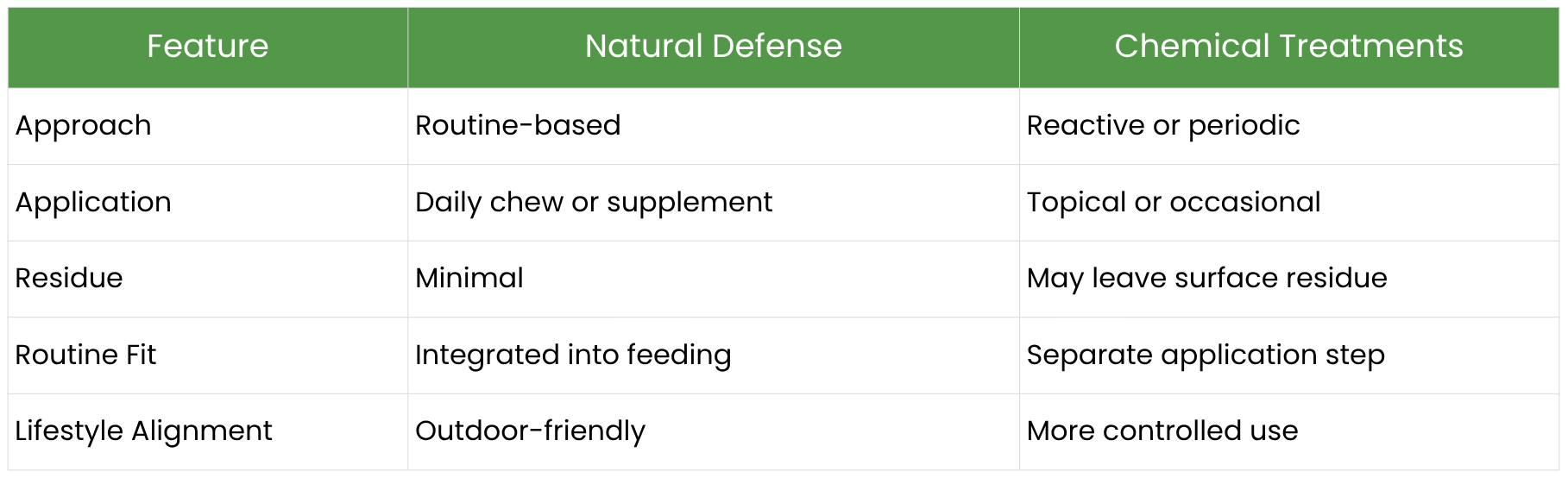
This comparison highlights a shift toward simplicity. Many pet owners prefer options that integrate seamlessly into their routine, especially when traveling or camping.
Practical Camping Habits That Support Your Pet
Beyond supplements or chews, daily habits play an important role in supporting your pet during outdoor trips. These small actions often make a noticeable difference.
Stick to the center of trails when hiking. This reduces contact with tall grass and brush where ticks are more likely to be present. After each outing, take a few minutes to check your pet’s coat, focusing on areas like under the collar, between toes, and around the ears.
Bringing familiar bedding can also help. It creates a consistent resting space and reduces exposure to unfamiliar surfaces. These habits, combined with a steady routine, create a more complete approach to outdoor care.
A Smarter Way to Prepare Before You Travel
As more pet owners prioritize preparation over reaction, products that support this approach are becoming part of everyday routines.
GCP Flea & Tick Natural Defense (for Dogs & Cats) is designed to fit into this type of system. With ingredients like apple cider vinegar, coconut oil, thiamine, and species-specific additions like anise (for dogs) and catnip (for cats), it aligns with a routine-based approach to care.
The chewable format makes it easy to incorporate into daily feeding, which helps maintain consistency leading up to your trip. Starting early allows the routine to build gradually, making it feel like a natural part of your pet’s lifestyle rather than an added step.
For pet owners planning outdoor adventures, this kind of simplicity often makes preparation easier to manage.
FAQs About Flea and Tick Protection While Camping
-
It’s generally recommended to start a few weeks before your trip. This allows routines to become consistent and easier to maintain once you’re outdoors.
Preparing Your Pet for the Outdoors
Camping with your pet is about enjoying the outdoors together, but preparation plays a key role in making the experience smooth and stress-free. By focusing on consistency, simple habits, and routine-based support, pet owners can create a system that feels manageable both at home and on the trail.
Rather than relying on last-minute solutions, starting early allows your pet’s routine to develop naturally. Over time, this approach makes outdoor adventures feel less complicated and more enjoyable.
GCP Flea & Tick Natural Defense
Supporting your pet’s outdoor routine starts with simple, consistent choices.
GCP Flea & Tick Natural Defense (Dogs & Cats)
-
No harsh chemicals
-
Made with apple cider vinegar and coconut oil
-
Includes anise (dogs) and catnip (cats)
-
With added thiamine
-
Easy chew format for daily use
-
Designed for routine-based support
A practical addition to your pet’s daily routine that supports a more natural approach to outdoor preparation.
References
Rossi, M., Bianchi, L., Conti, F., & De Santis, R. (2024). Seasonal variations in grooming behavior and dermatological responses in domestic cats. Animals, 14(5), 1234. https://pmc.ncbi.nlm.nih.gov/articles/PMC11898201/
For all general inquiries, please contact us at info@guardianschoice.com
© Copyright. All rights reserved.