Supporting Your Dog Through Back-to-School Separation
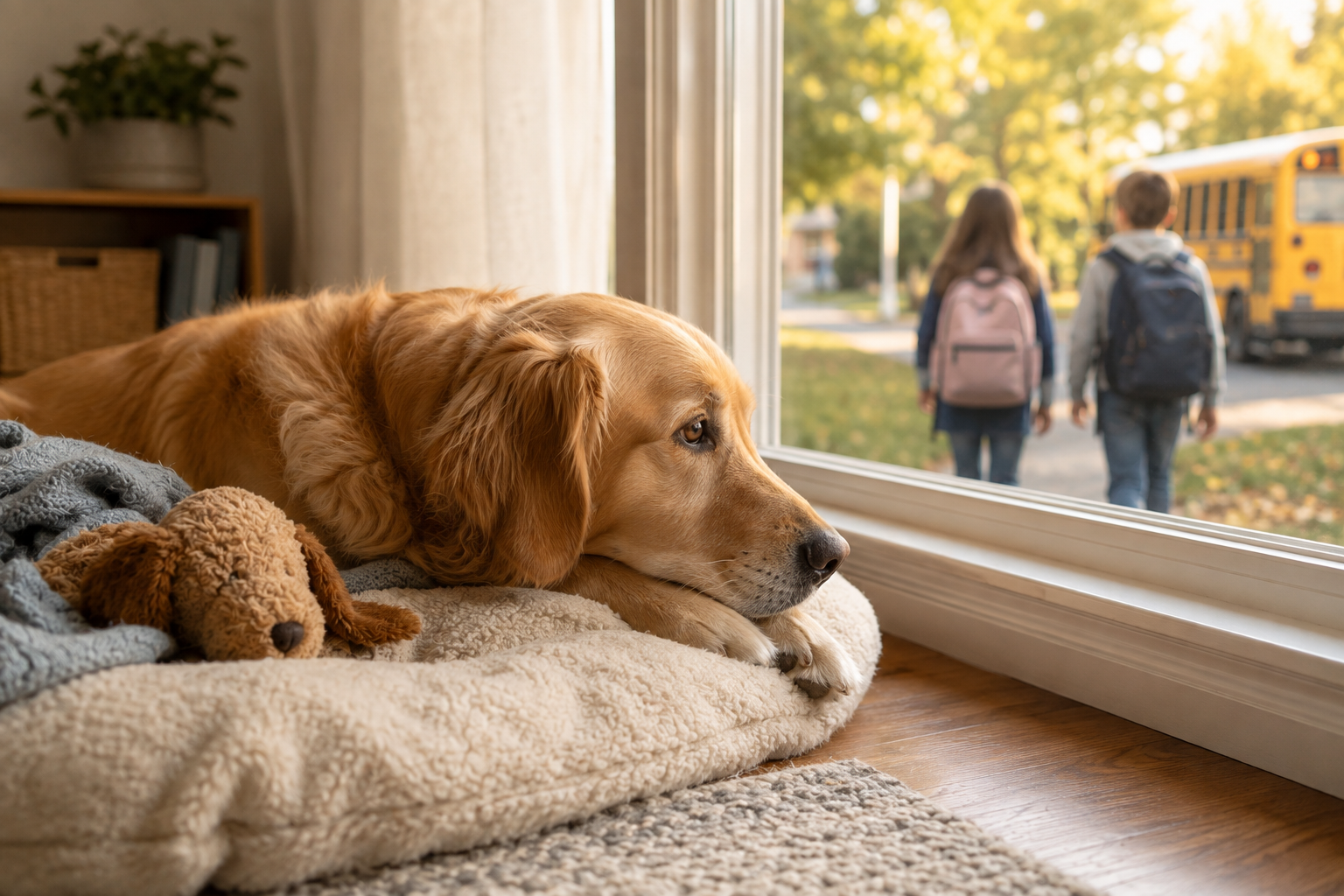
When summer ends and school schedules return, some dogs may notice a sudden change in companionship, activity, and household rhythm. Gradual departures, predictable meals and walks, safe enrichment, appropriate exercise, and attentive monitoring can help make the transition easier, while persistent or severe separation-related behavior deserves professional guidance.
Summer can create a very particular rhythm for dogs. Children are home more often, doors seem to open and close all day, walks happen at different times, and there may always be someone nearby for play, attention, or a quick trip outside. Then back-to-school season arrives, and what felt like a busy house on Friday can become noticeably quieter by Monday morning.
For some dogs, that transition barely registers. Others may need more time to settle into the new pattern, especially when they have become accustomed to near-constant companionship during the summer months. Back-to-school separation in dogs, dog separation stress, fall routine changes, indoor enrichment, and seasonal dog wellness therefore become useful topics for pet parents preparing for the school-year transition.
The important thing is not to assume that every dog who follows you to the door has separation anxiety. Dogs can react to routine changes in many ways, and occasional restlessness is very different from persistent distress. By watching your individual dog closely and making the new schedule more predictable, you can create a routine that feels familiar even when fewer people are home.
Why the Back-to-School Shift Can Feel So Different to Your Dog
Dogs are skilled at learning household patterns. They notice what happens after the alarm goes off, which pair of shoes means a walk, when breakfast appears, and whether a backpack usually means someone is about to leave the house.
During summer, those cues may become less predictable because family members come and go at different times. When school starts again, the household suddenly develops a more structured rhythm, and that can mean longer stretches when the dog is alone or has less interaction than they experienced a week earlier.
This does not automatically mean the change is harmful. Many dogs adapt comfortably to predictable periods alone, especially when their physical, social, and enrichment needs are being met. What matters is whether your dog can settle after you leave rather than remaining distressed for an extended period.
It can help to think beyond the moment you walk through the door. The whole morning contributes to the experience: waking, toileting, breakfast, activity, family movement, school preparation, and finally departure. Keeping that sequence calm and reasonably predictable gives your dog familiar cues to follow.
If you know the school schedule is about to change, beginning some of those adjustments before the first day can make the transition less abrupt.
Recognizing Changes Without Labeling Everything Separation Anxiety
The phrase “separation anxiety” is often used loosely to describe almost any unwanted behavior that occurs while an owner is away. True separation-related problems can be more complex, and not every chewed shoe, bark, or accident automatically points to anxiety.
Signs worth monitoring may include persistent vocalization, destructive behavior focused around doors or windows, repeated attempts to escape, house soiling despite established training, pacing, inability to settle, excessive salivation, or distress that begins when departure cues appear.
A study by Flannigan and Dodman examined dogs with separation anxiety and described behavioral patterns and risk factors associated with the condition. The research helps reinforce that separation-related behavior can involve a recognizable collection of behaviors rather than simply a dog appearing sad when a family member leaves.
That study does not mean a dog displaying one of these behaviors necessarily has separation anxiety. Destructive behavior can come from boredom, house soiling can have medical causes, barking can be triggered by outside activity, and appetite changes can be related to numerous health or environmental factors.
Video can be surprisingly useful if you are unsure what happens after you leave. A securely positioned pet camera may show whether your dog settles after several minutes, sleeps for much of the day, repeatedly patrols the house, or remains distressed.
That information can also be valuable if you later discuss the behavior with your veterinarian or a qualified veterinary behavior professional.
Start With a Predictable Morning and Departure Routine
Helping a dog adjust does not require an elaborate farewell ritual. In fact, predictable and relatively calm departures are often easier to repeat day after day.
Start the morning with enough time for your dog to toilet, eat according to their normal schedule, and receive age-appropriate activity before the household leaves. For some dogs, a comfortable walk with plenty of sniffing may fit well; for others, a short play or training session is more appropriate.
If the schedule is changing significantly, practice departures before school begins when possible. Leave for a brief, manageable period and return calmly, gradually incorporating longer routine absences that stay within what your dog can comfortably handle.
Avoid deliberately pushing a distressed dog to “get used to it.” If your dog becomes highly upset during even brief departures, professional guidance is more appropriate than repeatedly exposing them to an experience they cannot manage comfortably.
Departure cues can also become significant. Picking up keys, putting on work shoes, packing lunches, or closing a laptop may tell your dog what is coming next. Practicing some of those ordinary actions at times when you are not leaving can sometimes make the cues less tightly connected to every departure.
If you leave an item carrying your scent near your dog’s resting space, make sure it is something they will not chew, swallow, or shred. Safety matters more than sentiment.
Use Enrichment to Make Quiet Time More Engaging
A quieter house does not have to mean an empty day. Appropriate enrichment can give your dog something safe and enjoyable to do during periods when family interaction is reduced.
Food puzzles are one option, particularly for dogs who enjoy working for part of their normal meal. A puzzle feeder, stuffed food toy, snuffle-style activity, or other veterinarian-appropriate enrichment can turn a portion of breakfast into a longer activity rather than adding large amounts of extra food.
Choose enrichment according to your dog’s behavior when unsupervised. A toy that is perfectly safe during supervised play may not be suitable for a determined chewer when nobody is home.
Scent activities can also add interest without requiring intense physical exercise. Hiding small portions of food in appropriate locations before a short supervised practice session can encourage sniffing and problem-solving, and simple training exercises before departure provide another way to engage the brain.
Background sound may work for some households as well. A fan, familiar television program, or low-volume music can reduce the contrast between a busy summer home and complete daytime silence, although there is no need to introduce it if your dog is already comfortable in a quiet environment.
The purpose of enrichment is not to “distract away” genuine separation anxiety. It is to create an engaging and predictable environment for dogs who are capable of settling comfortably when left alone.
Keep Exercise Consistent as the Fall Schedule Changes
Back-to-school season often arrives at the same time that daylight becomes shorter and family schedules become busier. That combination can unintentionally reduce a dog’s activity from several directions at once.
A dog who spent summer playing with children throughout the afternoon may suddenly receive far less movement even if their scheduled walks remain the same. Before assuming that evening restlessness is anxiety, consider whether the total amount of activity and interaction has changed.
Try moving a longer walk to the morning or immediately after school when practical. Older dogs may appreciate shorter, gentler outings, while younger and more active dogs may benefit from a combination of walks, sniffing opportunities, training, and play.
Mental engagement matters alongside physical activity. Ten focused minutes of practicing familiar cues or exploring a scent game can add variety to an evening when outdoor time is limited.
Avoid relying on extremely intense exercise simply to make a dog too tired to react to being left alone. Exercise should support overall wellness and appropriate energy use rather than become a substitute for addressing genuine distress.
A midday dog walker, trusted family member, or pet-care professional may also be worth considering when the new school schedule creates a substantially longer period alone than your dog is accustomed to.
Pay Attention to Licking, Shedding, and Coat Changes
Pet parents sometimes notice increased licking, scratching, or loose fur at the same time a household routine changes and immediately assume that stress is responsible. While behavior and environmental changes can influence grooming patterns, excessive shedding or licking has many possible explanations.
Seasonal coat changes may occur around the same time as school starts. Allergies can become noticeable during late summer and fall, fleas or other parasites may cause irritation, and skin infections, pain, diet changes, or environmental factors can all influence the coat.
Repeated paw licking can also have behavioral, dermatological, or medical causes. If your dog is licking intensely enough to create redness, hair loss, sores, or skin damage, it is better to investigate the cause than to assume the behavior will disappear once the dog adjusts to the new schedule.
Regular brushing gives you a useful opportunity to monitor the skin and coat. Look for redness, flakes, thinning areas, unusual odor, lumps, or irritated spots, and keep track of whether the change is becoming more noticeable.
Nutrition belongs in the broader skin-and-coat conversation as well. Essential fatty acids, including omega-3 fatty acids, have normal nutritional roles, but no nutritional supplement should be presented as a treatment for anxiety, compulsive licking, allergies, or unexplained hair loss.
A complete diet, regular grooming, environmental care, and veterinary evaluation when something looks unusual remain the foundation.
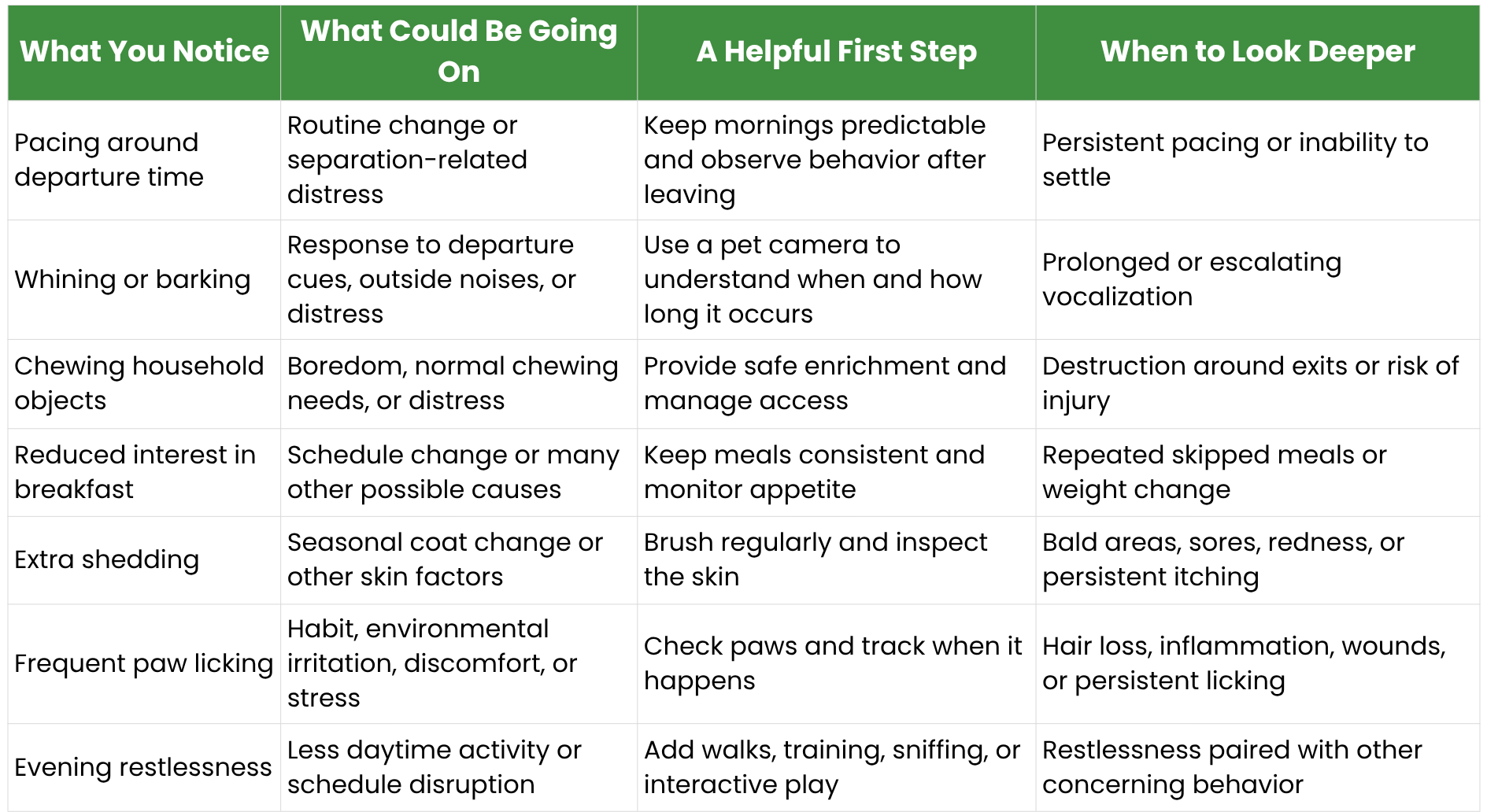
Back-to-School Adjustment Signs and Support at a Glance
Know When Your Dog May Need More Help
Some adjustment is expected when a household routine changes, but severe distress should not be treated as something a dog simply needs to “tough out.”
Talk with your veterinarian if your dog regularly panics when left alone, attempts to escape through doors or windows, injures themselves, destroys property in a way that puts them at risk, vocalizes persistently, stops eating, or develops significant house-soiling behavior.
A veterinarian can first consider medical conditions that might contribute to the changes. Depending on the situation, they may also recommend working with a veterinary behaviorist or another appropriately qualified behavior professional.
Avoid waiting for a fixed number of weeks before asking for help. There is no universal two-week or four-week adjustment timeline because dogs differ considerably in temperament, previous experience, health, age, and the severity of the behavior.
Early guidance can be particularly useful when signs are intense. The aim is not simply to stop unwanted behavior; it is to understand why the dog is struggling and build a plan that makes being alone more manageable.
Adding GCP OMEGAPaws to a Thoughtful Fall Wellness Routine
Once your dog’s new schedule includes predictable departures, appropriate exercise, enrichment, grooming, and any needed behavioral or veterinary support, Guardian’s Choice (GCP) OMEGAPaws Krill Omega-3 can be considered as a convenient nutritional addition to the broader fall routine.
The dog-specific product shown provides 90 tasty soft chews and features marine-source omega-3 nutrition. For pet parents already interested in supporting everyday skin, coat, and joint nutrition, the soft-chew format can make supplementation easy to pair with breakfast or another familiar part of the day.
The important distinction is that GCP OMEGAPaws is not an anxiety treatment and should not be positioned as a way to stop separation-related behavior or stress-induced licking. Its place in this story is nutritional: while you address the emotional and behavioral side of the back-to-school transition through routine and appropriate support, the product can complement the everyday nutrition and grooming habits that help you care for your dog’s skin, coat, and overall wellness.
Frequently Asked Questions
-
There is no universal adjustment period because dogs differ in temperament, previous experience, health, and how dramatically the household schedule changes. If your dog shows persistent or severe distress rather than gradually settling into the routine, ask your veterinarian for guidance.
Support Everyday Skin, Coat, and Joint Nutrition With GCP OMEGAPaws
GCP OMEGAPaws Krill Omega-3 provides a convenient marine-source omega-3 supplement for dogs in a 90-soft-chew format that can fit easily into an established daily wellness routine. It is designed to complement complete nutrition, grooming, age-appropriate activity, and veterinary care rather than serve as a treatment for anxiety, excessive licking, or other behavioral and medical concerns.
-
Provides marine-source omega-3 nutritional support
-
Convenient 90 tasty soft chews
-
Designed specifically for dogs
-
Can complement an everyday skin and coat nutrition routine
-
Can fit within broader joint and mobility wellness care
-
Easy to pair with a familiar breakfast or dinner schedule
-
Works naturally alongside regular brushing and coat monitoring
-
Provides a simple nutritional option during changing seasonal routines
-
Suitable for pet parents looking to add omega-3 nutrition when appropriate for their dog
-
Intended to complement—not replace—a complete diet, behavioral care, or veterinary treatment
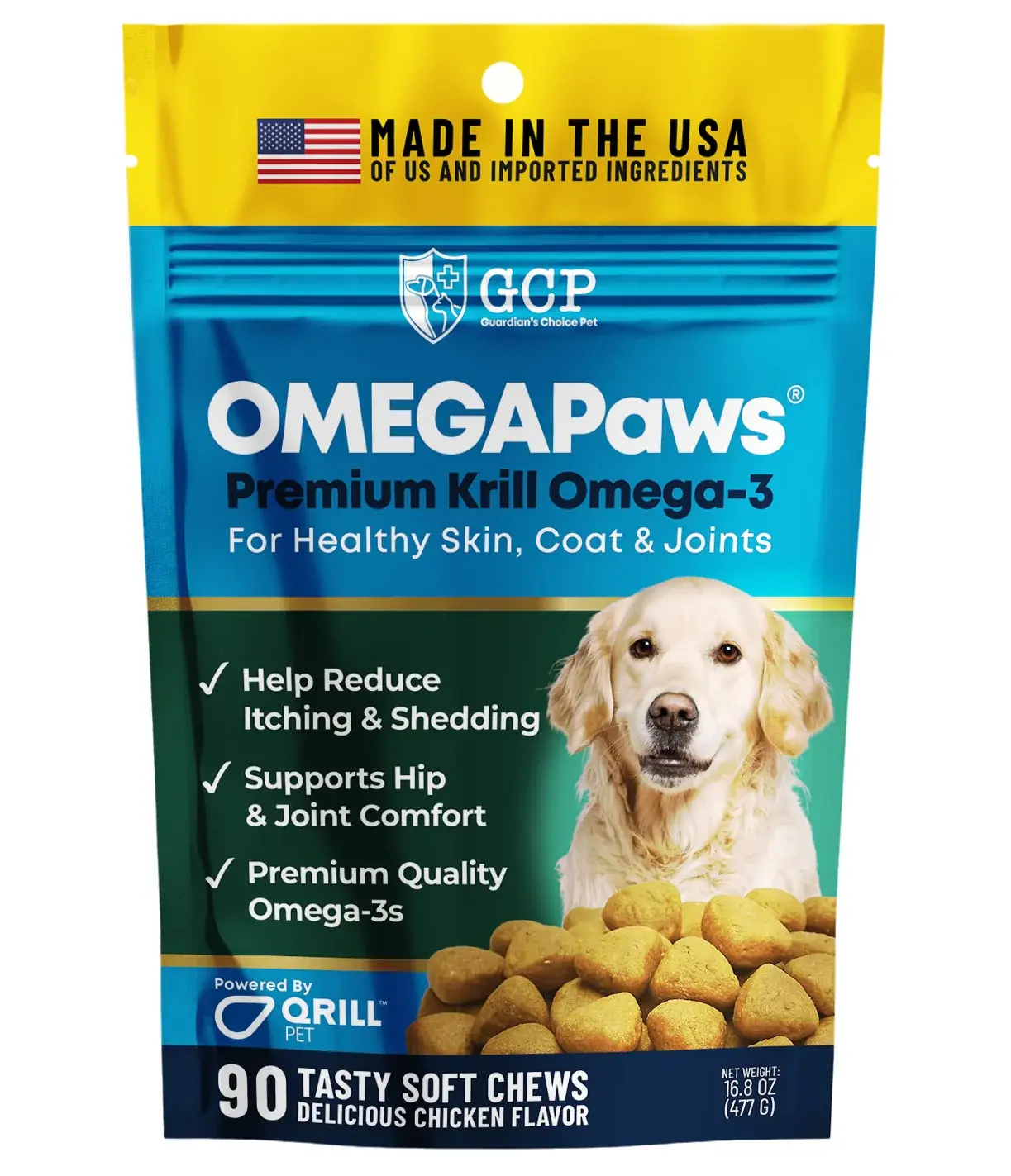
If your family is rebuilding its routine for the school year, GCP OMEGAPaws can provide one easy nutritional step that stays familiar even when the household schedule changes. Follow the current product label, consider your dog’s complete diet and existing supplements, and use it alongside the daily habits that matter most: movement, enrichment, grooming, predictable care, and plenty of quality time when everyone comes home.
Reference
Flannigan, G., & Dodman, N. H. (2001). Risk factors and behaviors associated with separation anxiety in dogs. Journal of the American Veterinary Medical Association, 219(4), 460–466. https://doi.org/10.2460/javma.2001.219.460
For all general inquiries, please contact us at info@guardianschoice.com
© Copyright. All rights reserved.