Autumn Walk Safety: Wild Mushrooms, Leaf Piles, and Fall Foraging Hazards for Dogs
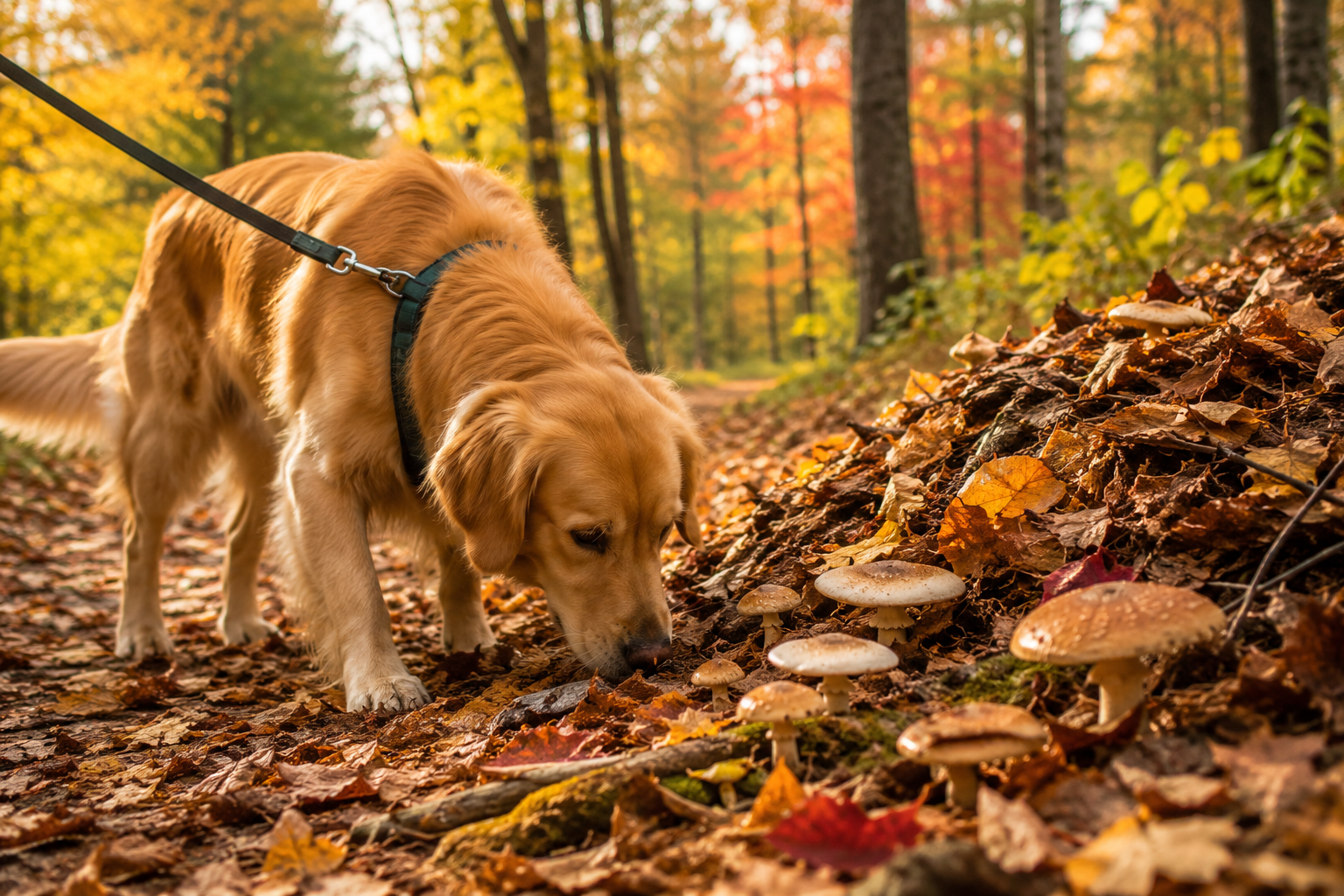
Autumn walks bring cooler weather and new smells, but they can also introduce wild mushrooms, damp leaf piles, fallen nuts, ticks, and tempting things dogs may try to eat along the trail. Keeping your dog close, checking the ground and coat, reinforcing a reliable “leave it,” and maintaining a consistent digestive and seasonal wellness routine can make fall adventures easier to enjoy.
There is a lot to love about walking your dog in autumn. The temperatures are cooler, familiar trails look completely different under changing leaves, and even the neighborhood can feel like a new place when every breeze carries a different scent. For dogs, those seasonal smells can make fall walks especially exciting, which is also why pet parents may suddenly find themselves saying “leave it” much more often.
Fall dog safety involves more than keeping an eye on the temperature. Wild mushrooms can appear after damp weather, piles of decomposing leaves can hide sharp debris or spoiled organic matter, acorns and nuts scatter across sidewalks, and ticks may still be present in brush or leaf litter. Dogs who love to sniff, forage, or pick things up can encounter several of these hazards before you have had time to notice them.
The goal is not to make autumn walks feel dangerous. It is to understand what changes with the season so you can keep the leash relaxed, let your dog enjoy the fresh air, and intervene before curiosity turns into an unexpected veterinary call.
Why Fall Walks Deserve a Little Extra Attention
Dogs experience a trail very differently from the humans holding their leashes. We admire the colors overhead; they are investigating what is underneath them. Damp soil, fallen fruit, wildlife scent, decomposing vegetation, discarded food, animal stool, and unfamiliar fungi can all become interesting enough for a dog to stop, sniff, lick, or swallow.
Autumn also changes visibility. A clean path in summer can become covered by several inches of leaves, making it difficult to see sticks, holes, broken glass, discarded food, or mushrooms until your dog is already standing on top of them. Early sunsets can add another layer of difficulty when the evening walk happens in low light.
A shorter leash in unfamiliar or heavily covered areas gives you more time to react without preventing your dog from sniffing. Bringing a flashlight on evening walks can also help you scan the ground before your dog reaches an object, while practicing a calm “leave it” or “drop it” at home can make those cues much more useful when something tempting appears outdoors.
Consistency matters here. Dogs learn through repetition, so the safest trail manners are usually built long before you actually need them.
Wild Mushrooms: Beautiful to See, Best Left Alone
Cooler temperatures combined with seasonal moisture can create favorable conditions for mushrooms in lawns, wooded areas, parks, and trail edges. The difficult part for pet parents is that harmless and potentially toxic mushrooms may grow near one another and can be very difficult to distinguish accurately in the moment.
Because identification is unreliable for most walkers, the simplest rule is to treat every unknown wild mushroom as something your dog should not eat. Do not rely on appearance, color, size, or whether wildlife seems to have disturbed the mushroom, because those observations cannot reliably tell you whether it is safe.
If your dog swallows part of an unknown mushroom, do not wait for symptoms before asking for help. Remove any remaining pieces from reach, take clear photographs of the mushroom and surrounding area if you can do so safely, and contact your veterinarian or an animal poison-control service promptly. If possible, photographs should show the cap, stem, underside, and where the mushroom was growing because that information may help professionals assess what happened.
Signs after mushroom ingestion can vary according to the species and toxin involved. Vomiting, drooling, diarrhea, weakness, unusual behavior, tremors, poor coordination, or lethargy can all justify immediate veterinary attention, but an absence of early symptoms should not be taken as proof that everything is fine.
Leaf Piles Can Hide More Than Your Dog Expects
Few things look more inviting to a playful dog than a fresh pile of leaves. Clean, recently raked leaves can make for a fun supervised romp, but old piles that have been sitting in damp conditions deserve more caution.
As leaves decompose, they hold moisture and collect organic material. They may also conceal sticks, stones, trash, sharp objects, animal waste, mushrooms, insects, or food that has been dropped nearby. Dogs who dive face-first into an old pile can encounter hazards you cannot see from above.
Mold can also develop on damp organic matter. Not every moldy leaf pile is going to make a dog sick, but eating decomposing material is best discouraged because you rarely know exactly what is mixed into it. If your dog begins vomiting, trembling, acting unusually, or showing other concerning signs after eating spoiled outdoor material, contact a veterinarian rather than assuming it is a simple upset stomach.
The safer alternative is to let your dog enjoy freshly gathered leaves in a controlled yard where you know what went into the pile. On public trails and sidewalks, redirect nose-first digging and keep moving when leaves appear old, wet, or mixed with unknown debris.
Acorns, Nuts, and Other Tempting Fall Finds
Mushrooms are not the only seasonal snacks dogs may discover. Acorns, walnuts, fallen fruit, seed pods, and other natural objects become increasingly common underfoot during autumn.
A dog who picks up one item and immediately drops it may not have a problem, but swallowing larger objects can create concerns ranging from digestive irritation to obstruction. Moldy nuts or spoiled fruit add another unknown because outdoor material may contain substances that are difficult to evaluate simply by looking at them.
Dogs with strong scavenging habits may need more active management in areas where acorns or fallen nuts cover the ground. Walking slightly away from the tree line, keeping the leash short enough to interrupt grabbing, and rewarding your dog for looking back at you instead of diving toward every object can gradually make autumn walks easier.
It is also helpful to carry treats your dog genuinely values. When “leave it” consistently leads to something better from you, choosing not to swallow the mysterious object becomes much more rewarding.
Why Scavenging and Stool Eating Need Their Own Plan
Some dogs are not satisfied with mushrooms or acorns; they seem determined to sample practically everything they encounter. Animal stool can be particularly tempting, which can be frustrating and unpleasant for owners.
Coprophagia, the term for eating feces, is a recognized canine behavior and does not automatically mean a dog has a nutritional deficiency. In a survey-based study of dog owners, Hart and colleagues found that coprophagia was not uncommon among dogs and that several popular explanations for the behavior did not neatly account for why some dogs did it.
That is useful context because it reminds us not to assume every stool-eating dog simply needs more vitamins or a different diet. The behavior may involve opportunity, learned habits, preferences, household factors, or other influences, while new or excessive scavenging can still deserve veterinary discussion if it appears alongside weight loss, persistent hunger, diarrhea, or other changes.
Management remains important during walks. Pick up household dog waste promptly, use a leash in areas where animal stool is common, practice “leave it,” and reward your dog for disengaging. A digestive wellness product or taste-deterrent product can complement that routine, but it should not be expected to erase a learned behavior without consistent management.
Fleas and Ticks Do Not Follow the Holiday Calendar
The unofficial end of summer does not create an immediate end to seasonal pests. Tick activity varies by species, region, temperature, humidity, and habitat, while fleas may remain relevant in protected environments and homes where pets spend time.
Autumn leaf litter can create sheltered areas at ground level, and dogs walking through brush or tall grass can pick up more than leaves on their coats. A quick post-walk check is therefore worth keeping in your routine even when mornings feel chilly.
Run your hands through the coat and pay particular attention around the ears, neck, underarms, belly, groin, paws, and tail area. Long-haired dogs may require a slower check because small changes are easier to miss beneath dense fur.
If you find an attached tick or evidence of fleas, use veterinarian-recommended removal or treatment guidance. A nutritional or botanical chew should not be considered a replacement for proven parasite prevention or treatment when your dog needs it.
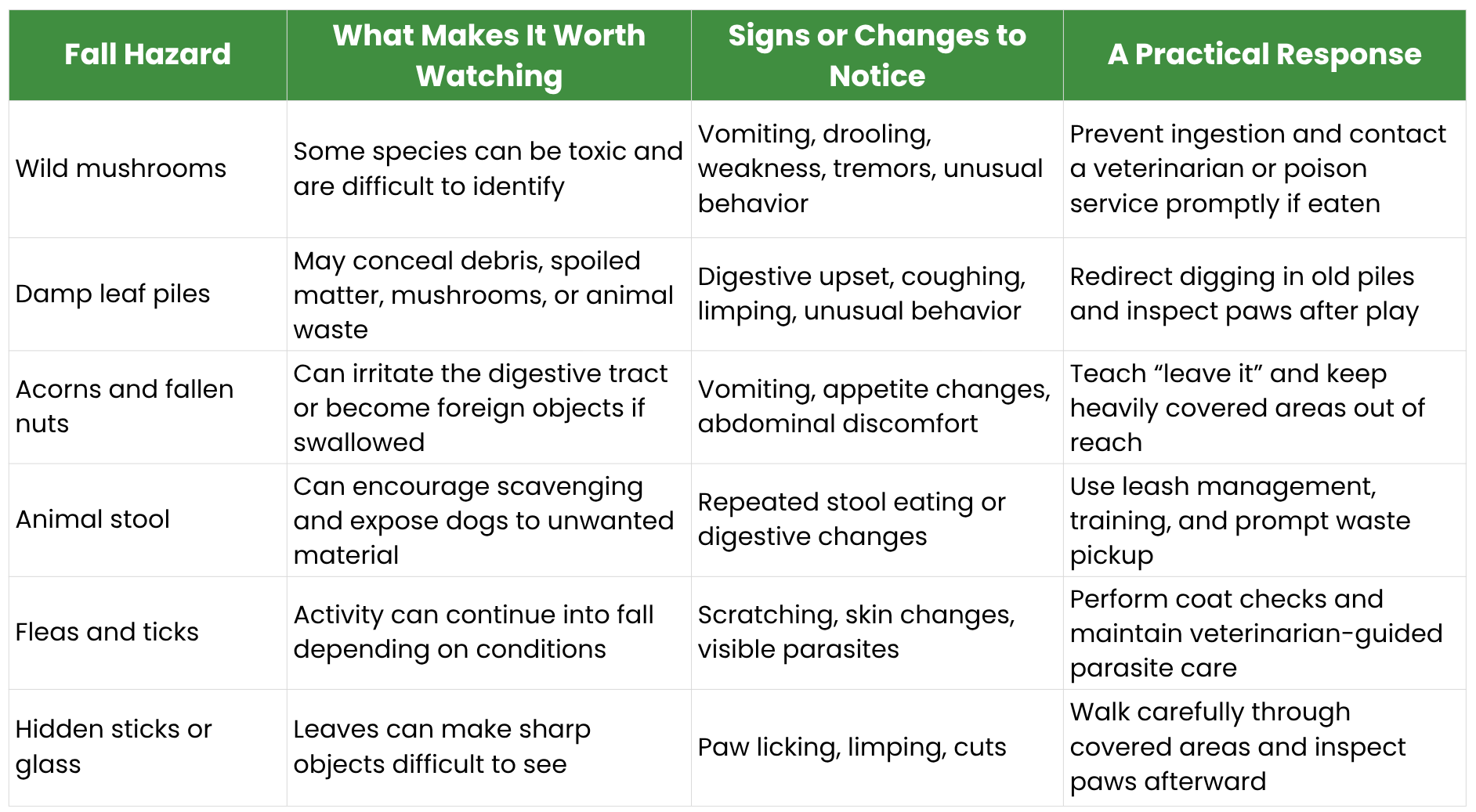
Fall Trail Hazards at a Glance
Build a Safer Autumn Walking Routine
A good fall routine begins before you step outside. Make sure the leash, collar or harness, and identification are secure, bring waste bags and water when needed, and choose a walking route that matches your dog’s age, mobility, and tendency to forage.
During the walk, give your dog plenty of appropriate opportunities to sniff while staying close enough to intervene around unknown food, mushrooms, animal waste, or heavily covered ground. Allowing sniffing does not mean giving unrestricted access to everything; a little structure lets your dog enjoy the sensory richness of autumn without turning the trail into a buffet.
Once home, spend a few minutes on a simple reset. Check paws for small cuts or debris, look over the coat, offer clean water, and return to the feeding and wellness routine your dog already knows. If your dog has a habit of stool eating or spends a lot of time exploring grassy and wooded spaces, this is also an ideal moment to stay consistent with any label-directed supplements you have chosen as part of the broader routine.
Add GCP NO POO and Flea & Tick Natural Defense to a Broader Fall Routine
Once leash skills, environmental awareness, coat checks, and veterinary parasite care are established, Guardian’s Choice (GCP) offers two dog-specific products that can fit naturally into a fall wellness schedule.
GCP NO POO Probiotic Chews come in a chicken-flavored, 120-soft-chew format. The label highlights digestive enzymes, prebiotics, and capsicum and positions the product as a stool-eating deterrent, making it an option for pet parents who want an additional routine-based step alongside training, prompt waste pickup, and digestive wellness care.
GCP Flea & Tick Natural Defense for Dogs comes in a chicken-flavored, 100-soft-chew format and features apple cider vinegar, coconut oil, anise, and thiamine on the label. It can be incorporated into a broader seasonal wellness routine while regular coat checks, environmental management, and veterinarian-recommended flea and tick prevention remain the foundation.
Neither product should be viewed as a guarantee. NO POO does not replace training or veterinary investigation of sudden digestive or appetite changes, while Flea & Tick Natural Defense should not replace appropriate parasite prevention or treatment when those measures are recommended.
Frequently Asked Questions
-
Remove access to any remaining pieces, photograph the mushroom if it is safe to do so, and contact your veterinarian or an animal poison-control service promptly. Do not wait for symptoms or induce vomiting unless a veterinary professional specifically tells you to.
Let Fall Adventures Stay Fun, Not Stressful
Autumn offers some of the best walking weather of the year, and dogs deserve to enjoy every crunchy leaf and interesting scent without their owners feeling anxious about what might be hiding around the next bend. The most useful approach is not avoiding nature but staying observant, keeping good leash habits in place, and knowing which seasonal finds are better admired from a distance.
Wild mushrooms, decomposing leaf piles, fallen nuts, animal waste, and seasonal pests all deserve a little extra awareness, but simple habits go a long way. Scan the trail, carry useful rewards, reinforce “leave it,” inspect the coat and paws afterward, and contact a professional promptly when your dog actually ingests something potentially dangerous.
A consistent home routine can then support what happens outside. Digestive care, environmental cleanliness, parasite management, appropriate nutrition, and thoughtfully chosen wellness products work best when each has a realistic role rather than being expected to solve every autumn concern on its own.
Two GCP Favorites for a More Prepared Fall Routine
GCP NO POO Probiotic Chews and GCP Flea & Tick Natural Defense for Dogs offer two convenient soft-chew formats that can complement different parts of your dog’s autumn care routine. One is designed around stool-eating and digestive wellness support, while the other provides a botanical and nutritional option for pet parents building a broader seasonal pest-awareness routine.
-
GCP NO POO Probiotic Chews: 120 chicken-flavored soft chews
-
Label highlights digestive enzymes as part of the formula
-
Includes prebiotics for an everyday digestive wellness routine
-
Includes capsicum, identified on the label as a natural taste deterrent
-
Designed to complement stool-eating management and training
-
GCP Flea & Tick Natural Defense for Dogs: 100 chicken-flavored soft chews
-
Features apple cider vinegar, coconut oil, anise, and thiamine
-
Label highlights “No Harsh Chemicals”
-
Convenient format for an established daily seasonal routine
-
Complements coat checks, grooming, environmental care, and veterinarian-guided parasite management
If your fall walks regularly involve curious foraging, shared trails, grass, brush, or other seasonal surprises, these two GCP products can make it easier to keep selected wellness steps organized in one familiar daily routine. Choose them for the convenience and support they add to the habits you are already building, follow the current labels carefully, and keep veterinary care and good outdoor management at the center of your dog’s autumn adventures.
Reference
Hart, B. L., Hart, L. A., Thigpen, A. P., & Willits, N. H. (2018). The paradox of canine conspecific coprophagy. Veterinary Medicine and Science, 4(2), 106–114. https://doi.org/10.1002/vms3.92
For all general inquiries, please contact us at info@guardianschoice.com
© Copyright. All rights reserved.