After the Fireworks: How to Help Your Pet Feel Calm Again
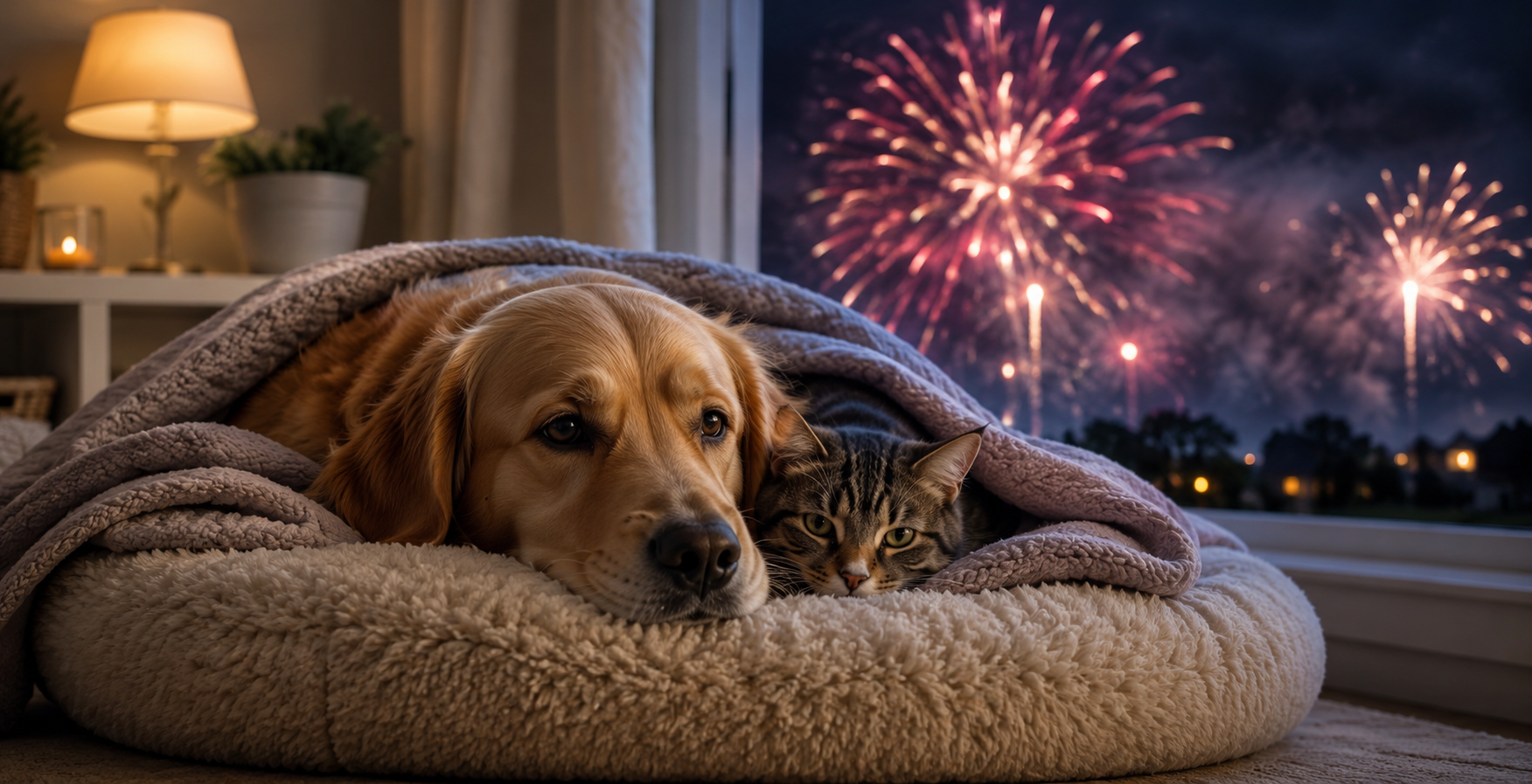
Fireworks may only last for a night, but dogs and cats may need extra time to feel settled again. Loud noises, disrupted sleep, hiding, pacing, reduced appetite, and routine changes can all affect how pets feel after a big celebration. A calm home environment, familiar meals, hydration, quiet rest, and daily wellness support can help pets ease back into their normal rhythm. For dogs, GCP OmegaPaws supports skin, coat, joint comfort, and overall wellness with omega-3 support. For cats, GCP Purrbiotics supports digestive health, gut balance, immune wellness, and skin and coat health with probiotic and prebiotic support.
Why Fireworks Can Affect Pets Even After the Noise Stops
For people, fireworks are part of a celebration. We know what the sounds are, we understand why they are happening, and we can remind ourselves that the noise will end. Dogs and cats do not have that same context. To them, sudden booms, bright flashes, and unfamiliar vibrations can feel unpredictable. Even when the neighborhood finally gets quiet, a pet’s body may still need time to settle back into its normal rhythm.
That is why some pets seem “off” the next day. A dog may follow you from room to room, seem less interested in play, or react to smaller sounds more than usual. A cat may hide longer than normal, eat less enthusiastically, groom differently, or avoid busy areas of the home. These changes can be stressful for pet parents, but they are also a reminder that pets often need recovery time after loud events.
Post-fireworks care should be gentle and realistic. The goal is not to force your pet back to normal immediately. The goal is to create a calm environment, bring back familiar routines, and support the body systems that may feel disrupted after stress, including digestion, skin and coat wellness, daily comfort, and overall vitality.
How Stress Can Show Up Differently in Dogs and Cats
Dogs and cats often respond to loud events in different ways. Dogs may pace, pant, whine, tremble, bark, or become extra clingy. Some dogs may seem restless and unable to settle, while others may sleep more the next day because the event took a lot out of them. If your dog spent the night hiding, jumping at sounds, or staying on alert, they may also feel physically tired afterward.
Cats can be more subtle. They may retreat under furniture, refuse to come out of a safe space, eat less, or become more cautious around normal household activity. Because cats are deeply tied to routine and territory, loud celebrations can affect their sense of safety even after the sound stops. A cat who normally lounges in the open may prefer hiding spots for a day or two while they readjust.
Both responses deserve patience. Pets are not being dramatic or difficult; they are trying to feel secure again. A calm home, regular feeding times, clean water, familiar bedding, and quiet interaction can help. When paired with daily wellness support, these small steps can create a smoother transition back to everyday life.
Why Digestion, Skin, Coat, and Comfort Matter After Big Events
Stress can influence more than behavior. After loud events, some pets may show changes in appetite, stool routine, breath, grooming, scratching, or overall comfort. This does not mean every small change is serious, but it does mean the body is connected. When routine, rest, and emotional comfort are disrupted, digestion and overall wellness can feel different too.
The gut is a major part of everyday pet wellness. A review published in Frontiers in Microbiology explains that the gastrointestinal microbiome of dogs and cats is closely connected to pet health, and that nutrition can influence the composition and activity of the microbiome. The study also notes that food and microbiome-targeted ingredients such as prebiotics and probiotics can affect microbiome composition and function. This should not be interpreted as proof that any product treats stress or medical conditions, but it does support the idea that nutrition plays an important role in daily pet wellness.
For dogs, omega-3 support can fit into a routine focused on skin, coat, joint comfort, and overall vitality. For cats, probiotic and prebiotic support can be especially helpful when routine changes affect digestion or appetite. After fireworks, the best approach is whole-pet care: comfort the mind, support the body, and return to routine slowly.
Post-Fireworks Pet Wellness Guide
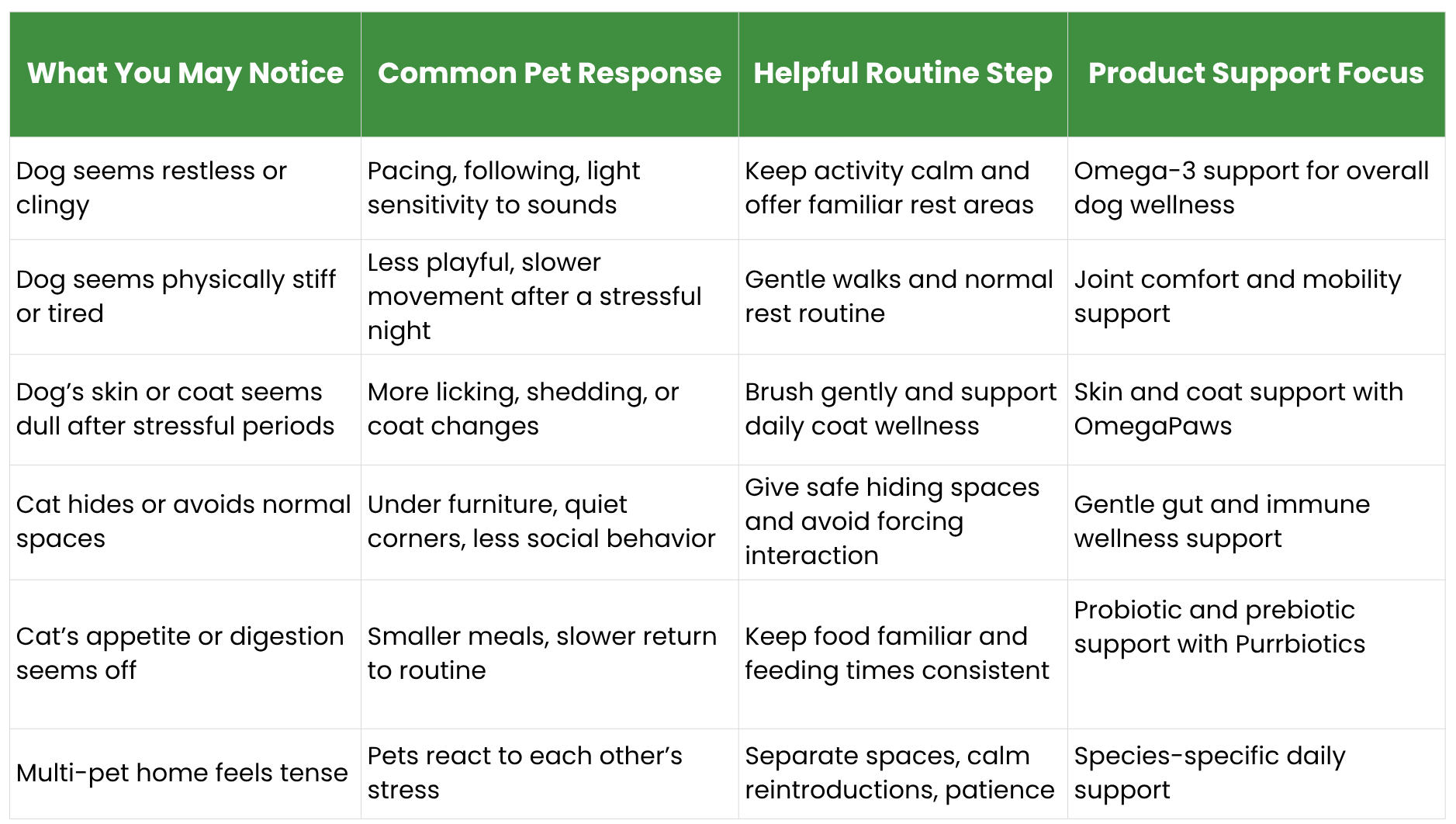
This table keeps the recovery plan simple. Dogs and cats do not always need the same type of support after stressful events. Dogs may benefit from omega-3 support for skin, coat, joints, and daily vitality, while cats may benefit from gut-focused support that helps them return to a steadier digestive routine.
Simple Ways to Help Pets Feel Like Themselves Again
The first step is to make the home feel predictable. Keep mealtimes consistent, refill water bowls, and avoid loud cleaning or major household changes if your pet is still unsettled. If your dog wants closeness, offer calm attention. If your cat wants space, let them hide without pressure. Comfort should feel like an invitation, not a demand.
Sleep and rest matter too. A pet who stayed alert for hours may need a quieter day afterward. Keep walks gentle, play sessions short, and household noise low. For dogs, a light walk can help restore normal routine, but avoid overstimulating environments right away. For cats, a quiet room with food, water, litter, and familiar bedding can make the day after fireworks feel more secure.
Nutrition should stay steady. Avoid switching foods immediately after a stressful event unless your veterinarian recommends it. Sudden changes can create more digestive disruption. Instead, return to familiar meals and add daily wellness support that matches your pet’s needs. For dogs, omega-3 chews can complement a routine focused on comfort, skin, coat, and mobility. For cats, probiotic and prebiotic powder can support digestion and gut balance as they settle back in.
Daily Recovery Support for Dogs and Cats
This is where GCP OmegaPaws for Dogs and GCP Purrbiotics for Cats fit naturally into a post-fireworks wellness routine. Both products support everyday pet health, but they focus on different needs based on the way dogs and cats may respond after stressful events.
For dogs, GCP OmegaPaws provides omega-3 support with QrillPet® krill oil to help support joint comfort, skin health, coat wellness, and overall vitality. This can be especially helpful for dogs who need steady daily support for active living, healthy-looking skin, and a soft, shiny coat. After a stressful night, it gives pet parents a simple way to keep whole-body wellness in the routine.
For cats, GCP Purrbiotics offers probiotic and prebiotic support with 5 billion CFU per scoop in a chicken liver flavor cats can enjoy. It is designed to support digestive health, gut balance, immune wellness, and skin and coat health. For cats who are sensitive to routine changes, visitors, loud noises, or post-event stress, daily gut support can help make the return to normal feel gentler.
Together, these products help pet parents support both dogs and cats after noisy celebrations: omega-3 wellness support for dogs and microbiome support for cats.
Frequently Asked Questions
-
Some pets need time to settle after sudden loud noises. Even when the fireworks are over, your dog or cat may still feel cautious, tired, clingy, or sensitive to everyday sounds.
Conclusion: Help Your Pet Reset With Gentle Daily Care
Fireworks can end quickly, but pets may carry the effects into the next day. Dogs may need extra comfort, gentle movement, and whole-body support. Cats may need quiet spaces, familiar routines, and digestive support to help them feel settled again. The best recovery plan is not complicated: keep the home calm, return to normal routines, offer patience, and support your pet’s body with the right daily wellness tools.
For multi-pet homes, species-specific support can make the routine feel more thoughtful. GCP OmegaPaws helps support dogs with omega-3 nutrition for skin, coat, joint comfort, and overall vitality. GCP Purrbiotics helps support cats with probiotics and prebiotics for digestive health, gut balance, immune wellness, and skin and coat health. With gentle care and consistency, your pets can ease back into normal life after noisy celebrations.
Product Feature: GCP OmegaPaws for Dogs
GCP OmegaPaws is a krill-based omega-3 soft chew made for dogs who need daily support for skin, coat, joint comfort, and overall wellness. Powered by QrillPet® krill oil, it offers a convenient way to add omega-3 support to your dog’s routine in a soft chew format.
Benefits:
-
Supports joint comfort and mobility
-
Supports healthy skin
-
Helps maintain a soft, shiny-looking coat
-
Supports normal immune function
-
Provides omega-3 fatty acids from QrillPet® krill oil
-
Easy-to-serve soft chews
-
Fits into daily wellness routines for active and everyday dogs
If your dog needs whole-body support after busy, stressful, or noisy days, GCP OmegaPaws is a simple way to support their daily foundation. Pair it with familiar routines, fresh water, gentle activity, and plenty of calm reassurance.
Product Feature: GCP Purrbiotics for Cats
GCP Purrbiotics is a daily probiotic and prebiotic powder made specifically for cats. With 5 billion CFU per scoop and a chicken liver flavor, it is designed to support feline digestive health, gut balance, immune wellness, and healthy skin and coat as part of a consistent routine.
Benefits:
-
Supports digestive health in cats
-
Helps support gut balance
-
Supports immune wellness
-
Supports healthy skin and coat
-
Provides 5 billion CFU per scoop
-
Includes probiotic and prebiotic support
-
Chicken liver flavor cats can enjoy
-
Easy to mix into daily meals
If your cat is sensitive to routine changes, loud events, visitors, or post-fireworks disruption, GCP Purrbiotics can help support their daily gut wellness. Add it to meals as directed to help your cat return to a steadier, more comfortable routine.
Citation:
Wernimont, S. M., Radosevich, J., Jackson, M. I., Ephraim, E., Badri, D. V., MacLeay, J. M., Jewell, D. E., & Suchodolski, J. S. (2020). The effects of nutrition on the gastrointestinal microbiome of cats and dogs: Impact on health and disease. Frontiers in Microbiology, 11, Article 1266. https://doi.org/10.3389/fmicb.2020.01266
For all general inquiries, please contact us at info@guardianschoice.com
© Copyright. All rights reserved.