The 48-Hour Detox: Flushing Out Stress Toxins in Multi-Pet Homes
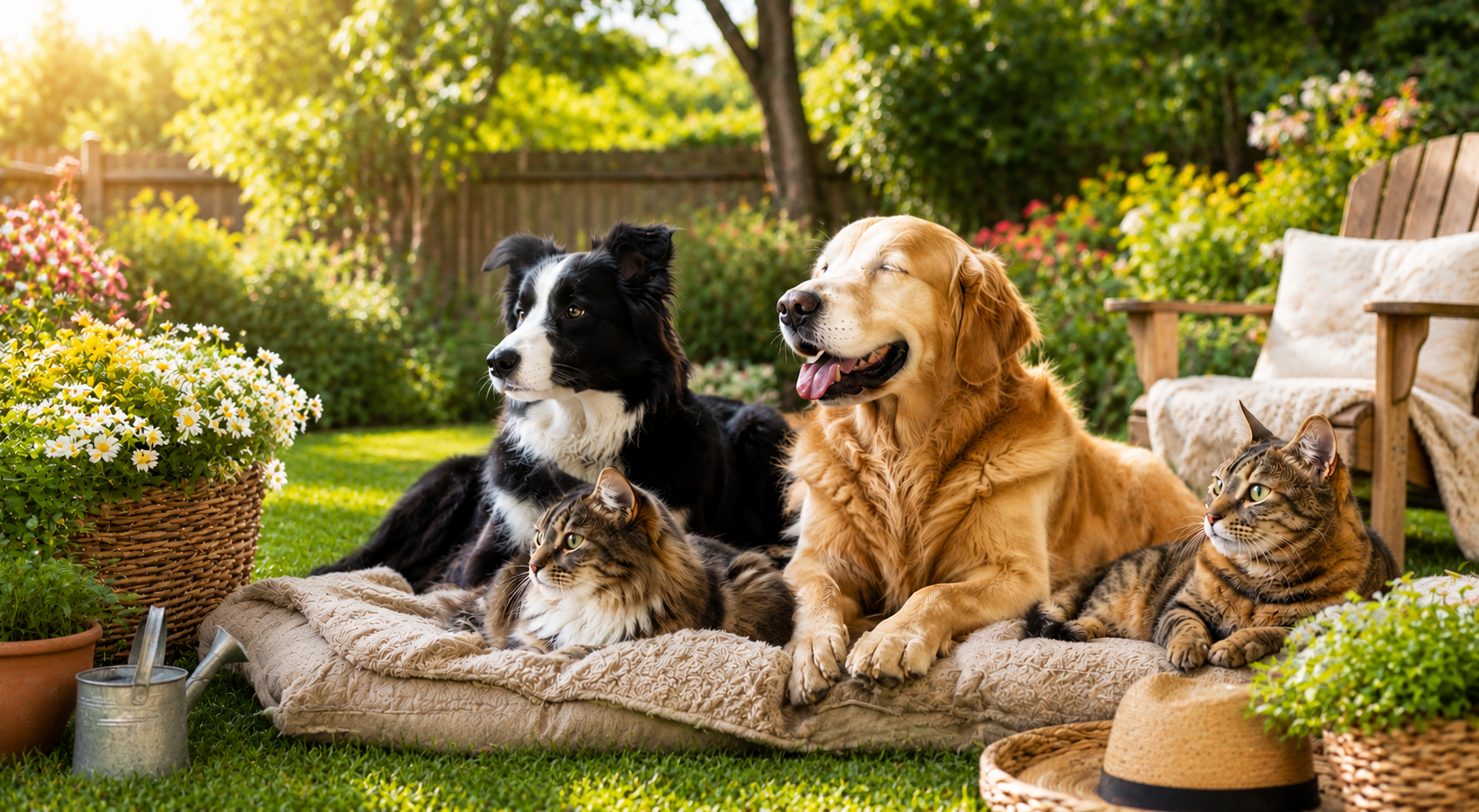
In multi-pet homes, stress rarely stays with just one animal. A nervous dog, a tense cat, a new guest, loud noises, schedule changes, or household conflict can affect the whole group through body language, scent cues, disrupted routines, and shared spaces. A 48-hour “detox” should be understood as a gentle reset, not a medical detox: it focuses on quiet zones, hydration, predictable feeding, separate rest areas, and targeted support for skin, coat, gut health, and immune wellness with products like GCP OMEGAPaws Krill Omega-3 for dogs and GCP Purrbiotics for cats.
Why Stress Spreads Quickly in Multi-Pet Homes
Multi-pet homes are full of energy, affection, and personality. One pet may be playful, another may be cautious, and another may act like the unofficial manager of the house. When everything is calm, this mix can feel warm and comforting. But when stress enters the home, pets can pick up on it faster than many people realize.
Dogs and cats read the room through body language, sound, scent, movement, and routine. A dog pacing near the window may make another dog more alert. A cat hiding under the bed may make the other cats more cautious. A new visitor, fireworks, thunderstorms, moving furniture, travel bags, or a change in feeding time can create tension that spreads across the group. Pets may not understand the reason for the change, but they can feel that the household rhythm is different.
This is where the idea of a 48-hour pet stress detox becomes useful. The word “detox” does not mean you are medically flushing toxins from your pet’s body. In this context, it means creating a calm, structured reset that helps your pets return to normal routines after a stressful event. The goal is to reduce sensory pressure, support hydration, encourage rest, and give each pet enough space to feel safe again.
Stress can affect visible behavior, but it may also show up in the body. Some pets eat less, drink less, shed more, groom more, scratch more, or have changes in stool quality after stressful events. A study published in Brain, Behavior, and Immunity found that exposure to a social stressor altered the structure of the intestinal microbiota and was linked with stress-related immune changes. While this study was not designed to prove outcomes for every dog or cat in a household, it supports the broader idea behind the 48-hour reset: stress can affect the gut environment, which is why calm routines, hydration, and digestive support are worth paying attention to after household tension or stressful events.
What Household Tension Can Look Like in Dogs and Cats
Stress does not always look dramatic. In a multi-pet home, the signs may be subtle and easy to dismiss. One dog may follow you from room to room more than usual. Another may lick their paws, shed more heavily, or seem unsettled during mealtime. A cat may skip a meal, hide in a new place, groom more intensely, or avoid a hallway where another pet is resting.
Digestive changes are also common during stressful periods. Dogs may have softer stools, gas, or reduced appetite after a tense day. Cats may show changes in litter box habits, stool consistency, or food interest. These signs can have many possible causes, so they should not be blamed on stress automatically. If symptoms are severe, repeated, or paired with vomiting, blood, lethargy, pain, or refusal to eat, a veterinarian should be contacted.
Skin and coat changes can also appear when the household is tense. Dogs may stress-shed, scratch more often, or lick certain areas. Cats may overgroom or develop a duller-looking coat if their routine stays disrupted. Again, this does not mean stress is the only cause. Fleas, allergies, infections, diet changes, and other concerns can affect the skin and coat too. But during stressful household events, it is helpful to watch these signs closely.
The key is to observe patterns. Did the behavior begin after fireworks, guests, boarding, a new pet introduction, a move, or a schedule change? Is more than one pet acting differently? Are food, water, bathroom habits, and sleep returning to normal? A 48-hour reset gives you a practical way to help the home settle while you monitor each pet’s comfort.
The 48-Hour Stress Reset Timeline
A good reset is simple, calm, and realistic. The goal is not to control every behavior. It is to reduce pressure in the environment and support the body’s return to routine.
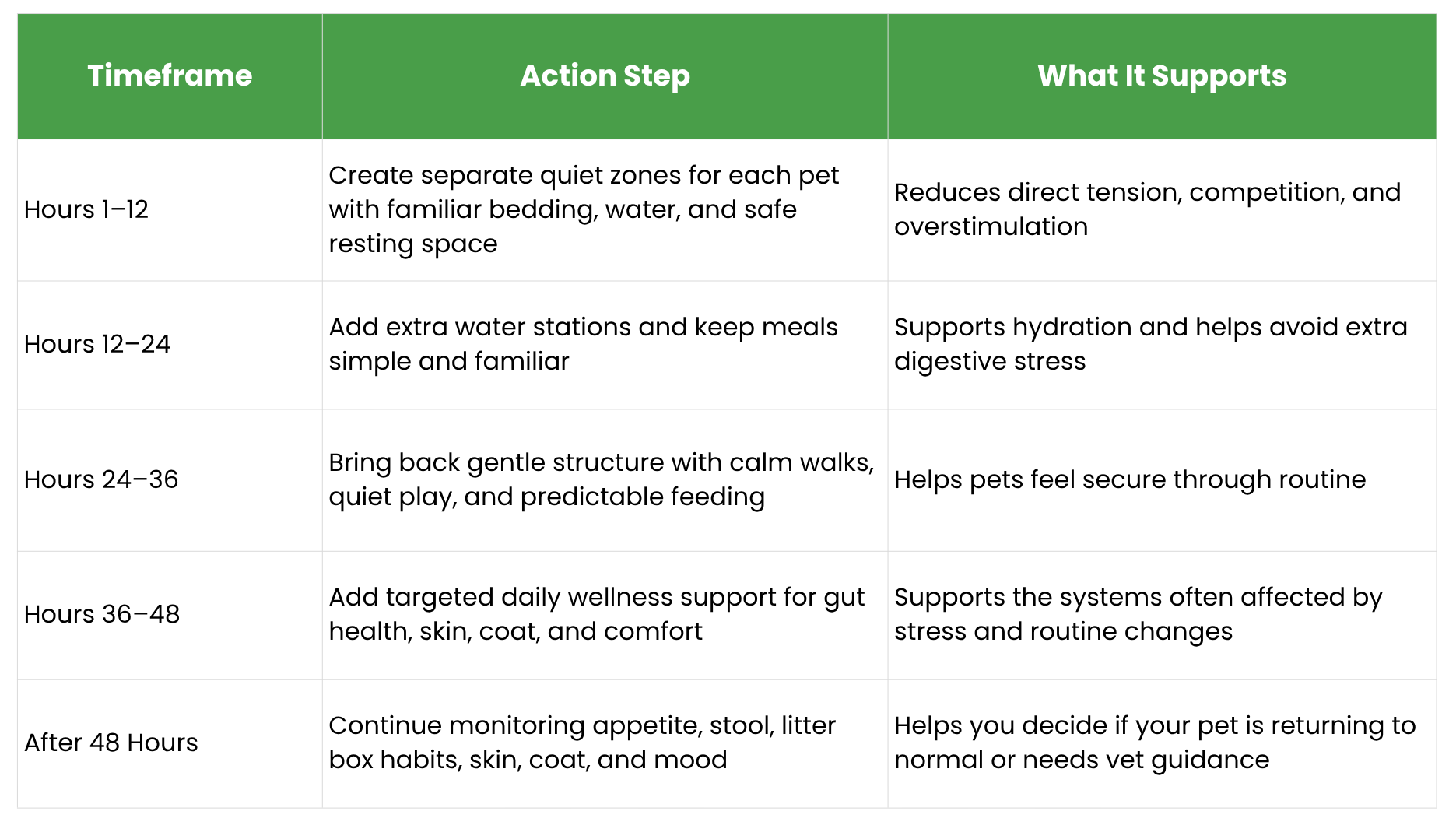
This timeline is gentle enough for everyday use and flexible enough for both dogs and cats. Some pets may bounce back quickly, while others need more time. The important thing is to avoid adding more stimulation too soon. After a stressful event, a busy dog park trip, a new food, a grooming appointment, or a house full of visitors may be too much.
How Hydration, Quiet Zones, and Routine Help Pets Rebalance
The first step in a multi-pet reset is space. Even bonded pets need room to decompress. A quiet zone gives each pet a place where they do not have to compete for attention, food, toys, beds, or access to the litter box. For dogs, this may be a crate, bedroom, or calm corner. For cats, it may be a separate room, a cat tree, a closet area, or a familiar hiding spot with food, water, and litter nearby.
Hydration is the next step. Stress can change drinking habits, especially when pets are hiding, pacing, or avoiding shared spaces. Adding extra water bowls around the home makes drinking easier and reduces competition. For cats, water placed away from food and litter may be more appealing. For dogs, fresh water after walks or play helps support normal recovery.
Food should stay familiar. It can be tempting to offer rich treats to comfort a stressed pet, but sudden food changes can make the gut feel worse. Keep meals simple and predictable for at least 48 hours. If a pet is not eating normally, monitor closely and contact your veterinarian if appetite loss continues.
Routine is the final piece. Pets feel safer when life becomes predictable again. Feed at the usual time, walk dogs at calm times, keep litter boxes clean, and avoid unnecessary changes. Gentle one-on-one time can also help, especially in homes where pets compete for attention. A few minutes of calm brushing, quiet play, or relaxed companionship can help each pet feel seen without creating more excitement.
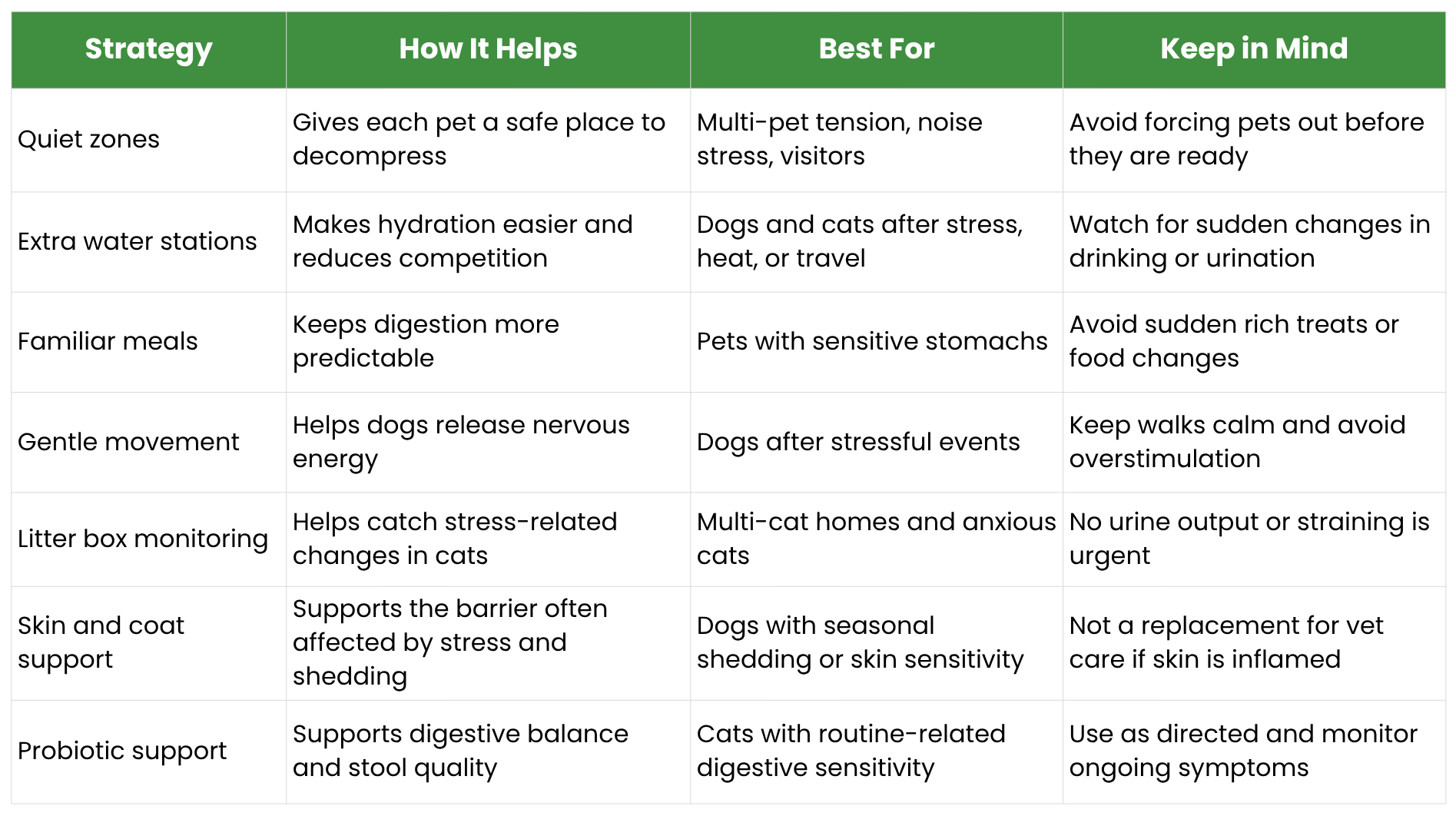
Stress Support Strategy Comparison
Supporting Dogs and Cats From the Inside With GCP
Once the home environment is calmer, targeted wellness support can help complete the 48-hour reset. For dogs, stress can sometimes show up through shedding, licking, scratching, or coat changes. GCP OMEGAPaws Krill Omega-3 supports skin and coat health, skin barrier function, and everyday joint comfort with omega-3 fatty acids. It fits naturally into a routine for dogs who need support during tense seasons, busy households, or periods of environmental change.
For cats, stress often shows up in the gut first. A cat may eat less, hide more, or show changes in stool or litter box habits when the household feels unsettled. GCP Purrbiotics supports digestive health, gut microbiome balance, immune wellness, and healthier skin and coat with probiotics and prebiotics. Its chicken liver flavor and powder format make it easy to add to meals, which is helpful for cats who prefer familiar routines.
Together, these products support a warm, species-aware approach to multi-pet care. Dogs and cats do not need the same supplement, but they do need the same kind of thoughtful attention: calm spaces, steady routines, hydration, and support that matches their bodies.
Frequently Asked Questions
-
A 48-hour pet stress detox is a gentle reset routine that helps pets return to normal after household tension, fireworks, travel, guests, or major schedule changes. It is not a medical detox, but a structured plan focused on quiet, hydration, familiar meals, and daily wellness support.
A Calmer Home Starts With a Gentler Routine
In a multi-pet home, stress can move through the household quickly. One anxious pet may change the energy of the entire space, and the effects can show up in behavior, appetite, digestion, skin, coat, and bathroom habits. A 48-hour reset gives pet parents a simple way to slow everything down and help each animal feel safe again.
The best approach is gentle and consistent: create quiet zones, add water stations, keep meals familiar, return to routine slowly, and support each pet with species-appropriate wellness products. GCP OMEGAPaws Krill Omega-3 helps support dogs through skin, coat, and joint wellness, while GCP Purrbiotics helps support cats through digestive, immune, skin, and coat wellness. Together, they fit into a thoughtful multi-pet routine built around calm, care, and daily consistency.
GCP OMEGAPaws Krill Omega-3 and GCP Purrbiotics
GCP OMEGAPaws Krill Omega-3 and GCP Purrbiotics are designed to support two different pets with two different wellness needs. Dogs often show stress through skin, coat, shedding, and movement changes, while cats may show stress through digestion, appetite, litter box habits, and grooming.
Benefits of GCP OMEGAPaws Krill Omega-3 for Dogs:
-
Supports healthy skin and coat
-
Helps support the skin barrier from within
-
Supports everyday joint comfort and mobility wellness
-
Provides omega-3 fatty acids, including EPA and DHA
-
Fits active dogs and multi-pet households with busy routines
-
Supports normal inflammatory balance as part of daily care
-
Complements grooming, hydration, and regular skin checks
Benefits of GCP Purrbiotics for Cats:
-
Supports digestive health and gut microbiome balance
-
Includes probiotics and prebiotics for daily gut support
-
Supports immune wellness as part of feline care
-
Promotes healthier skin and coat through digestive wellness
-
Helps support stool quality and litter box comfort
-
Chicken liver flavor helps make daily use easier
-
Powder format mixes easily with food
For pet parents managing a multi-pet home, these products make it easier to give each animal support that fits their species and routine. Choose GCP OMEGAPaws for your dog’s skin, coat, and joint wellness, and GCP Purrbiotics for your cat’s gut and immune support, then pair both with a calm home reset when tension runs high.
Citation:
Stella, J. L., Lord, L. K., & Buffington, C. A. T. (2011). Sickness behaviors in response to unusual external events in healthy cats and cats with feline interstitial cystitis. Journal of the American Veterinary Medical Association, 238(1), 67–73. https://pubmed.ncbi.nlm.nih.gov/21194250/
For all general inquiries, please contact us at info@guardianschoice.com
© Copyright. All rights reserved.